Healthy soil is the foundation of successful farming and gardening. It supports plant growth, stores water, and maintains ecological balance. However, overuse of chemical fertilizers and pesticides has damaged soil quality in many regions. As a result, farmers and gardeners are now turning toward organic methods to restore soil health naturally.
This guide explores practical, effective, and sustainable ways to improve soil without relying on harmful chemicals.
What Is Soil Health?
Soil health refers to the ability of soil to function as a living ecosystem. In other words, healthy soil supports plants, animals, and microorganisms while maintaining environmental balance.
Good soil is:
- Rich in nutrients
- Well-structured
- Full of beneficial microorganisms
- Able to retain moisture
- Free from harmful toxins
Therefore, improving soil health is essential for long-term productivity.
Why Avoid Chemical Fertilizers?
Chemical inputs may give quick results. However, they often damage soil over time.
Common Problems Caused by Chemicals
- Loss of natural soil fertility
- Reduction in microbial life
- Soil compaction
- Water pollution
- Increased dependency on external inputs
As a result, soil becomes less productive in the long run. Therefore, organic methods are a better and more sustainable choice.
Benefits of Organic Soil Improvement
Switching to organic practices offers multiple advantages.
- Improves soil structure
- Enhances nutrient availability
- Supports beneficial organisms
- Increases water retention
- Promotes sustainable farming
In addition, it reduces environmental harm and improves crop quality.
Composting: The Heart of Organic Soil Health
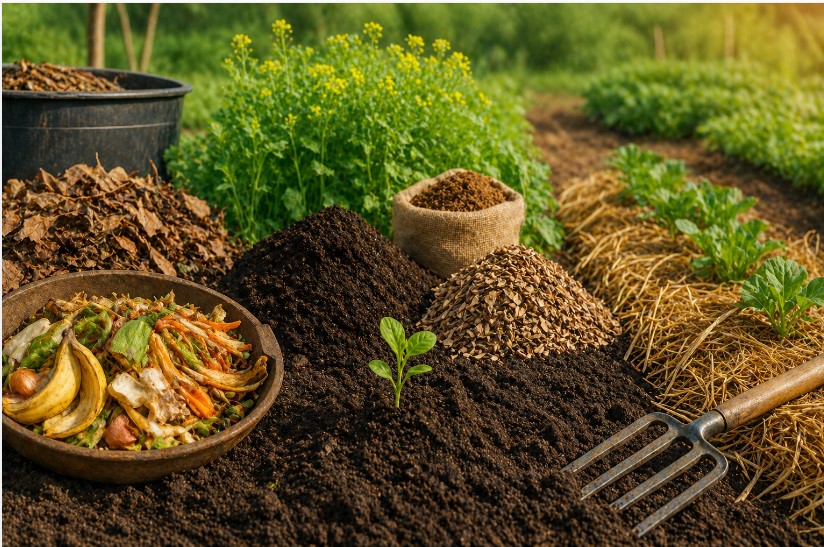
Composting is one of the most effective ways to enrich soil naturally. It involves breaking down organic waste into nutrient-rich material.
What Can You Compost?
You can use:
- Kitchen waste (vegetable peels, fruit scraps)
- Dry leaves
- Grass clippings
- Animal manure
- Crop residues
However, avoid meat, dairy, and oily foods.
Benefits of Compost
Compost improves soil in many ways:
- Adds essential nutrients
- Improves soil texture
- Boosts microbial activity
- Enhances water retention
As a result, plants grow healthier and stronger.
Simple Composting Method
- Collect organic waste
- Layer green and brown materials
- Keep the pile moist
- Turn it regularly
Within a few weeks, you will get rich compost.
Crop Rotation: A Natural Soil Booster
Crop rotation means growing different crops in the same area in different seasons. This practice helps maintain soil balance.
Why Crop Rotation Works
Different crops use different nutrients. Therefore, rotating crops:
- Prevents nutrient depletion
- Reduces pests and diseases
- Improves soil fertility
For example, legumes add nitrogen to the soil, which benefits the next crop.
Basic Crop Rotation Plan
- Grow legumes (like beans)
- Follow with leafy vegetables
- Then plant root crops
This cycle keeps the soil balanced and productive.
Green Manure: Feeding the Soil Naturally
Green manure involves growing plants specifically to improve soil health. These plants are later mixed into the soil.
Common Green Manure Crops
- Sunhemp
- Clover
- Mustard
- Cowpea
Benefits of Green Manure
- Adds organic matter
- Improves soil structure
- Increases nitrogen levels
- Prevents soil erosion
Therefore, it acts as a natural fertilizer.
Mulching: Protecting and Nourishing Soil
Mulching involves covering the soil with organic materials. It protects the soil and improves its quality.
Types of Mulch
- Straw
- Dry leaves
- Wood chips
- Grass clippings
Benefits of Mulching
- Retains soil moisture
- Controls weeds
- Regulates temperature
- Adds organic matter over time
As a result, soil remains healthy and productive.
Vermicomposting: Power of Earthworms
Vermicomposting uses earthworms to convert organic waste into nutrient-rich compost.
How It Works
Earthworms break down organic matter and produce vermicast, which is highly beneficial for soil.
Benefits of Vermicompost
- Rich in nutrients
- Improves soil aeration
- Enhances microbial activity
- Promotes plant growth
In addition, it is easy to manage at home or on farms.
Cover Crops: Protecting Soil Between Seasons
Cover crops are grown to cover the soil when it is not in use. They protect and improve soil quality.
Examples of Cover Crops
- Legumes
- Grasses
- Mustard
Benefits of Cover Crops
- Prevent soil erosion
- Improve soil structure
- Add nutrients
- Suppress weeds
Therefore, they play a key role in sustainable farming.
Natural Soil Microorganisms
Healthy soil is full of life. Microorganisms help break down organic matter and release nutrients.
Why Microorganisms Matter
- Improve nutrient availability
- Enhance soil structure
- Support plant health
How to Support Them
- Add compost regularly
- Avoid chemicals
- Maintain moisture
As a result, soil becomes more fertile and active.
Water Management for Soil Health
Water plays a crucial role in maintaining soil quality.
Best Practices
- Avoid overwatering
- Use drip irrigation
- Improve drainage
Proper water management prevents soil damage and nutrient loss.
Common Mistakes to Avoid
While improving soil organically, avoid these errors:
- Overusing one method
- Ignoring soil testing
- Using raw manure directly
- Poor composting practices
Therefore, a balanced approach is essential.
Biofertilizers: Nature’s Nutrient Boosters
Biofertilizers are natural products that contain beneficial microorganisms. These microbes help plants absorb nutrients more efficiently.
Common types include:
- Nitrogen-fixing bacteria
- Phosphate-solubilizing bacteria
- Mycorrhizal fungi
Benefits of Biofertilizers
- Improve nutrient availability
- Enhance root growth
- Reduce need for external inputs
- Support long-term soil fertility
As a result, crops grow healthier without chemical fertilizers.
Soil Testing: Understanding Your Soil
Before improving soil, it is important to know its current condition. Therefore, soil testing plays a key role.
What Soil Testing Reveals
- Nutrient levels
- pH balance
- Organic matter content
Why It Matters
With proper testing, you can:
- Apply the right organic inputs
- Avoid overuse of compost or manure
- Improve efficiency
In other words, soil testing helps you make informed decisions.
Organic Matter: The Backbone of Healthy Soil
Organic matter is essential for soil health. It improves structure, fertility, and moisture retention.
Sources of Organic Matter
- Compost
- Farmyard manure
- Crop residues
- Green manure
Benefits of Organic Matter
- Improves soil texture
- Increases water-holding capacity
- Supports microbial life
Therefore, adding organic matter regularly is crucial.
Natural Pest and Disease Control
Healthy soil reduces pest problems. However, additional natural methods can protect crops.
Organic Pest Control Methods
- Neem-based solutions
- Crop diversity
- Beneficial insects
Benefits
- Protects plants without chemicals
- Maintains ecological balance
- Prevents soil contamination
As a result, both soil and crops remain healthy.
Role of Earthworms in Soil Health
Earthworms are often called “nature’s farmers.” They play a vital role in improving soil quality.
How Earthworms Help
- Break down organic matter
- Improve soil aeration
- Enhance nutrient cycling
Encouraging Earthworm Activity
To attract earthworms:
- Add organic matter
- Keep soil moist
- Avoid chemical use
This creates a living and active soil system.
Agroforestry: Combining Trees and Crops
Agroforestry is a sustainable practice where trees and crops are grown together.
Benefits of Agroforestry
- Prevents soil erosion
- Improves soil fertility
- Enhances biodiversity
- Provides additional income sources
Therefore, it is a long-term solution for soil improvement.
Reduced Tillage: Protecting Soil Structure
Frequent plowing can damage soil structure. Therefore, reduced tillage or no-till farming is gaining popularity.
Benefits of Reduced Tillage
- Maintains soil structure
- Preserves microorganisms
- Reduces erosion
- Improves water retention
As a result, soil remains stable and productive.
Challenges in Organic Soil Management
While organic methods are effective, they also come with challenges.
Common Challenges
- Slow results compared to chemicals
- Need for continuous effort
- Initial learning curve
- Limited availability of organic inputs in some areas
How to Overcome Them
- Start gradually
- Combine multiple methods
- Stay consistent
- Learn from experience
In time, the benefits outweigh the challenges.
Practical Tips for Farmers and Gardeners
To get the best results, follow these simple strategies:
Start Small
Begin with a small area. Then expand as you gain experience.
Mix Different Methods
Do not rely on one technique. Instead, combine composting, mulching, and crop rotation.
Observe Your Soil
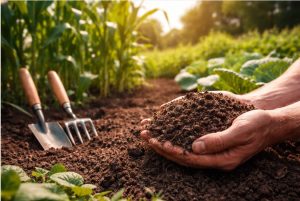
Healthy soil looks dark, crumbly, and full of life. Regular observation helps you track progress.
Be Consistent
Organic improvement takes time. Therefore, consistency is key.
Environmental Impact of Organic Soil Practices
Organic soil management benefits not only farmers but also the environment.
Positive Impacts
- Reduces pollution
- Improves water quality
- Supports biodiversity
- Helps combat climate change
Soil and Climate Connection
Healthy soil stores carbon. Therefore, it plays a role in reducing global warming.
Comparing Organic and Chemical Farming
| Factor | Organic Methods | Chemical Methods |
|---|---|---|
| Soil Health | Improves over time | Degrades over time |
| Cost (long-term) | Lower | Higher |
| Environmental Impact | Low | High |
| Sustainability | High | Low |
This comparison clearly shows the long-term benefits of organic practices.
Is Organic Soil Management Worth It?
Yes, organic methods are worth the effort. Although results take time, they provide lasting benefits.
- Healthier soil
- Better crop quality
- Sustainable farming system
Therefore, switching to organic practices is a smart choice.
Biochar: A Powerful Soil Enhancer
Biochar is a charcoal-like material made from organic waste. It is added to soil to improve fertility.
Benefits of Biochar
- Improves soil structure
- Increases water retention
- Supports beneficial microbes
- Stores carbon for long periods
As a result, it enhances both soil health and environmental sustainability.
Compost Tea
Compost tea is a liquid made by soaking compost in water. It contains beneficial microorganisms.
Why Use Compost Tea
- Boosts microbial activity
- Improves plant immunity
- Enhances nutrient absorption
Therefore, it acts as a natural soil and plant booster.
Integrated Organic Farming
Integrated farming combines different organic practices into one system.
Example
- Crops + livestock + composting
This system:
- Reduces waste
- Improves soil naturally
- Increases farm productivity
Future of Soil Health Without Chemicals
The future of agriculture is shifting toward sustainability. Organic soil management will play a major role.
Focus on Soil Regeneration
Farmers are now focusing on restoring soil rather than just using it. This approach is known as regenerative agriculture.
Key Principles
- Minimal soil disturbance
- Continuous soil cover
- Crop diversity
As a result, soil becomes healthier over time.
Technology Supporting Organic Farming
Modern tools now help farmers manage soil better:
- Soil sensors
- Moisture monitoring systems
- Data-based farming decisions
Although methods are natural, technology improves efficiency.
Building a Long-Term Soil Health Plan
Improving soil is not a one-time task. Instead, it requires a long-term approach.
Step-by-Step Plan
Start with soil testing
Understand your soil condition first.
Add organic matter regularly
Use compost, manure, and crop residues.
Rotate crops
Prevent nutrient imbalance.
Use mulch and cover crops
Protect and nourish soil.
Monitor progress
Observe changes and adjust methods.
Consistency Is the Key
Organic methods take time. However, consistent effort leads to strong and lasting results.
Expert Tips for Sustainable Soil Management
To achieve the best results, follow these expert suggestions:
Focus on Diversity
Grow different crops instead of relying on a single type. This improves soil balance.
Protect Soil Surface
Always keep soil covered with mulch or plants. This prevents erosion and moisture loss.
Avoid Overuse of Inputs
Even organic materials should be used in balance. Too much compost or manure can harm soil.
Encourage Natural Life
Healthy soil is full of organisms. Therefore, protect microbes and earthworms.
Common Mistakes to Avoid
Even with good intentions, mistakes can reduce effectiveness.
Ignoring Soil Testing
Without testing, you may not know what your soil actually needs.
Using Fresh Manure
Fresh manure can harm plants. Always use well-composted material.
Lack of Planning
Random methods do not work well. A clear plan gives better results.
Expecting Quick Results
Organic soil improvement takes time. Therefore, patience is important.
Final Thoughts: Why Organic Soil Health Matters
Soil is a living system. When treated well, it supports life for years. However, harmful practices can damage it quickly.
Organic methods help:
- Restore soil fertility
- Improve crop quality
- Protect the environment
Therefore, improving soil naturally is not just a choice—it is a responsibility.
Conclusion
Healthy soil leads to healthy crops, and healthy crops lead to a healthy life. Organic methods provide a safe, sustainable, and effective way to improve soil without chemicals.
Although the process takes time, the benefits are long-lasting. In the end, investing in soil health means investing in the future.
FAQs:
Soil health refers to the soil’s ability to support plant growth, maintain nutrients, retain water, and sustain beneficial microorganisms.
Chemical fertilizers may give quick results, but over time they reduce soil fertility, harm microbes, and cause environmental pollution.
Composting is one of the most effective methods. It enriches soil with nutrients and improves its structure naturally.
It depends on the condition of the soil. However, noticeable improvement can take a few months, while full restoration may take years.
Yes, with proper planning and consistent practices, organic methods can replace chemical inputs and maintain good productivity.
Cover crops are plants grown to protect and enrich soil. They prevent erosion, improve fertility, and control weeds.