Introduction to Ecosystems
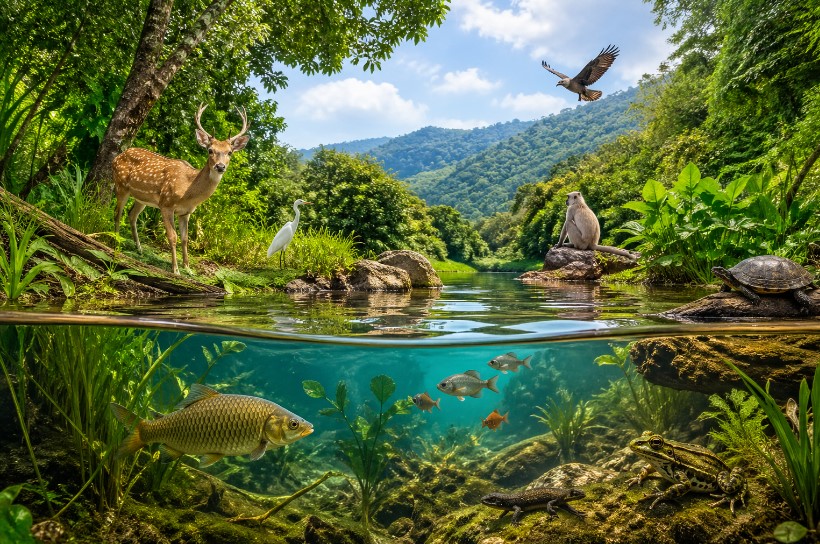
An ecosystem is a dynamic and complex system where living organisms interact with each other and with their physical environment. These interactions create a balanced network that supports life on Earth. From dense forests to vast oceans, every ecosystem functions through the relationship between living and non-living components.
Understanding these components is essential because they determine how energy flows and how nutrients cycle within the environment. Moreover, ecosystems provide vital services such as clean air, water, food, and climate regulation.
What Are Ecosystem Components?
Ecosystem components are broadly divided into two main categories: biotic and abiotic factors.
Biotic factors include all living organisms within an ecosystem. On the other hand, abiotic factors consist of non-living elements such as sunlight, water, soil, and temperature.
Both components are interconnected. Therefore, a change in one factor can influence the entire ecosystem.
Understanding Biotic Factors
Biotic factors refer to all living organisms that exist within an ecosystem. These organisms depend on each other for survival and form complex relationships.
Types of Biotic Factors
Biotic components can be classified into three main groups based on their role in the ecosystem.
Producers (Autotrophs)
Producers are organisms that create their own food using energy from the sun or chemical sources. They form the foundation of the ecosystem.
Examples of Producers
Plants, algae, and certain bacteria are common producers. They use the process of photosynthesis to convert sunlight into energy.
Importance of Producers
Producers play a crucial role because they supply energy to all other organisms. Without them, life in most ecosystems would not exist.
Consumers (Heterotrophs)
Consumers are organisms that cannot produce their own food. Instead, they rely on other organisms for energy.
Types of Consumers
Consumers are divided into different categories based on their feeding habits.
Herbivores
These animals feed on plants. Examples include deer, rabbits, and insects.
Carnivores
Carnivores eat other animals. Lions and wolves are common examples.
Omnivores
Omnivores consume both plants and animals. Humans and bears fall into this category.
Role of Consumers
Consumers help maintain balance in ecosystems by controlling population sizes. They also contribute to energy transfer within the food chain.
Decomposers and Detritivores
Decomposers break down dead organisms and organic waste into simpler substances.
Examples
Bacteria and fungi are the primary decomposers in most ecosystems.
Importance
Decomposers recycle nutrients back into the soil. As a result, they support plant growth and sustain the ecosystem.
Interactions Among Biotic Factors
Living organisms interact in various ways to survive and thrive.
Types of Interactions
Predation
One organism hunts and consumes another.
Competition
Organisms compete for limited resources such as food, water, and space.
Symbiosis
Different species live closely together and interact in specific ways.
- Mutualism: Both species benefit
- Commensalism: One benefits, the other is unaffected
- Parasitism: One benefits at the expense of the other
These interactions create a balanced system within ecosystems.
Food Chains and Food Webs
Energy flows through ecosystems in the form of food chains and food webs.
Food Chain
A food chain shows a linear sequence of energy transfer from one organism to another.
Food Web
A food web is a complex network of interconnected food chains. It provides a more realistic representation of ecosystem interactions.
Food webs increase stability because organisms have multiple food sources.
Understanding Abiotic Factors
Abiotic factors are the non-living components of an ecosystem. They influence the survival and distribution of living organisms.
Key Abiotic Factors
Several abiotic factors play a critical role in shaping ecosystems.
Sunlight
Sunlight is the primary source of energy for most ecosystems.
Role of Sunlight
It drives photosynthesis in plants, which produces energy for other organisms. In addition, sunlight affects temperature and climate patterns.
Temperature
Temperature influences the metabolic activities of organisms.
Impact on Ecosystems
Different species have specific temperature ranges for survival. Therefore, temperature variations can determine the types of organisms found in an ecosystem.
Water
Water is essential for all forms of life.
Importance
It supports biological processes such as digestion, respiration, and reproduction. Moreover, water availability affects the distribution of organisms.
Soil
Soil provides nutrients and support for plants.
Components of Soil
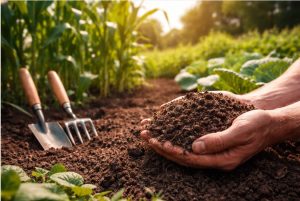
It contains minerals, organic matter, water, and air. These elements determine soil fertility.
Role in Ecosystems
Healthy soil promotes plant growth, which in turn supports other organisms.
Air and Atmospheric Gases
Air contains gases such as oxygen, carbon dioxide, and nitrogen.
Importance
Oxygen is necessary for respiration, while carbon dioxide is used in photosynthesis. Nitrogen plays a key role in plant growth.
Minerals and Nutrients
Minerals such as phosphorus, potassium, and calcium are essential for organism growth.
Nutrient Cycles
These nutrients move through ecosystems in cycles, ensuring continuous availability.
Climate and Weather
Climate includes long-term patterns of temperature, rainfall, and wind.
Influence on Ecosystems
Climate determines the type of vegetation and animal life in a region. For example, deserts, forests, and tundras all have distinct climates.
Interaction Between Biotic and Abiotic Factors
Biotic and abiotic components are closely linked.
Examples of Interaction
Plants use sunlight, water, and carbon dioxide to produce food. Animals depend on plants for energy. Decomposers return nutrients to the soil.
Importance of Balance
A stable ecosystem depends on the balance between these factors. Any disturbance can disrupt the entire system.
Ecosystem Stability and Balance
Ecosystems maintain stability through natural processes.
Factors Affecting Stability
Changes in climate, pollution, and human activities can disturb ecosystems.
Maintaining Balance
Natural mechanisms such as predator-prey relationships help regulate populations and maintain equilibrium.
Human Impact on Ecosystem Components
Human activities significantly affect both biotic and abiotic factors.
Examples
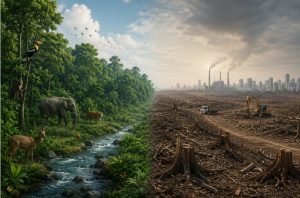
Deforestation, pollution, and climate change alter natural conditions.
Consequences
These changes can lead to loss of biodiversity and ecosystem imbalance.
Importance of Understanding Ecosystem Components
Studying ecosystem components helps us understand how nature works.
Benefits
It aids in conservation efforts and sustainable resource management. Moreover, it helps predict environmental changes and their impacts.
Energy Flow in Ecosystems
Energy flow is one of the most important processes in any ecosystem. It determines how organisms survive, grow, and interact with each other. Unlike nutrients, energy flows in one direction and does not cycle back.
The primary source of energy for most ecosystems is sunlight. Plants capture this energy and convert it into a usable form. Then, this energy moves through different levels of the ecosystem.
Trophic Levels in Ecosystems
Trophic levels represent the different stages in a food chain based on how organisms obtain energy.
Primary Producers
At the first level, producers convert sunlight into chemical energy through photosynthesis. They form the base of the energy pyramid.
Primary Consumers
These organisms feed on producers. Herbivores fall into this category because they consume plants.
Secondary Consumers
Secondary consumers eat primary consumers. They are usually carnivores or omnivores.
Tertiary Consumers
These are top predators that feed on secondary consumers. They play a key role in maintaining ecological balance.
Energy Transfer Efficiency
Energy transfer between trophic levels is not fully efficient. Only a small portion of energy passes to the next level.
The 10 Percent Rule
On average, only about 10 percent of energy is transferred from one level to the next. The remaining energy is lost as heat or used for metabolic processes.
Impact on Food Chains
Because of this energy loss, food chains are usually short. Ecosystems cannot support many levels of consumers.
Ecological Pyramids
Ecological pyramids help visualize energy distribution in ecosystems.
Pyramid of Energy
This pyramid shows how energy decreases at each trophic level. It is always upright because energy flows in one direction.
Pyramid of Biomass
This pyramid represents the total mass of living organisms at each level. In most ecosystems, biomass decreases as you move up.
Pyramid of Numbers
This pyramid shows the number of organisms at each level. It may vary depending on the ecosystem.
Nutrient Cycles in Ecosystems
Unlike energy, nutrients cycle through ecosystems. These cycles ensure that essential elements are reused and remain available.
The Water Cycle
The water cycle describes how water moves through the environment.
Key Processes
Evaporation turns water into vapor. Condensation forms clouds. Precipitation returns water to the surface.
Importance
This cycle maintains water availability for all living organisms. It also regulates temperature and climate.
The Carbon Cycle
The carbon cycle involves the movement of carbon between the atmosphere, organisms, and the Earth.
Key Processes
Plants absorb carbon dioxide during photosynthesis. Animals release it through respiration. Decomposers return carbon to the soil.
Human Impact
Burning fossil fuels increases carbon dioxide levels. As a result, it contributes to climate change.
The Nitrogen Cycle
Nitrogen is essential for building proteins and DNA.
Key Processes
Nitrogen fixation converts atmospheric nitrogen into usable forms. Plants absorb it from the soil. Animals obtain nitrogen by consuming plants.
Role of Bacteria
Bacteria play a crucial role in converting nitrogen into different forms. Without them, the cycle would not function properly.
The Phosphorus Cycle
The phosphorus cycle does not involve the atmosphere.
How It Works
Phosphorus moves from rocks to soil and water. Plants absorb it, and animals obtain it through food.
Importance
It is essential for energy transfer and genetic material in living organisms.
Ecosystem Productivity
Productivity refers to the rate at which energy is produced and stored in an ecosystem.
Primary Productivity
This is the rate at which producers create organic matter through photosynthesis.
Factors Affecting Productivity
Sunlight, water, temperature, and nutrient availability all influence productivity.
Types of Ecosystems
Tropical forests have high productivity due to favorable conditions. In contrast, deserts have low productivity because of limited water.
Ecosystem Dynamics
Ecosystems are not static. They constantly change due to natural and human influences.
Ecological Succession
Succession is the process by which ecosystems develop over time.
Primary Succession
This occurs in areas where no life existed before, such as after a volcanic eruption.
Secondary Succession
This occurs in areas where life previously existed but was disturbed, such as after a forest fire.
Importance
Succession helps restore ecosystems and maintain biodiversity.
Population Dynamics
Population dynamics study how populations change over time.
Factors Influencing Population
Birth rate, death rate, immigration, and emigration all affect population size.
Carrying Capacity
This is the maximum number of individuals an environment can support.
When populations exceed this limit, resources become scarce, leading to a decline.
Limiting Factors in Ecosystems
Limiting factors control the growth and distribution of organisms.
Types of Limiting Factors
Biotic factors include competition and predation. Abiotic factors include temperature and water availability.
Role in Ecosystems
These factors prevent populations from growing uncontrollably. Therefore, they help maintain balance.
Adaptations in Ecosystems
Organisms develop adaptations to survive in their environment.
Types of Adaptations
Structural adaptations involve physical features. Behavioral adaptations involve actions or patterns.
Examples
Desert plants store water to survive dry conditions. Animals may migrate to find food and suitable climates.
Biodiversity and Its Importance
Biodiversity refers to the variety of life within an ecosystem.
Levels of Biodiversity
It includes genetic diversity, species diversity, and ecosystem diversity.
Benefits
High biodiversity increases ecosystem stability. It also provides resources such as food, medicine, and raw materials.
Threats to Ecosystem Dynamics
Ecosystems face several threats that disrupt their natural balance.
Climate Change
Rising temperatures affect species distribution and ecosystem processes.
Pollution
Air, water, and soil pollution harm both biotic and abiotic components.
Habitat Destruction
Deforestation and urbanization reduce biodiversity and disrupt ecosystems.
Role of Conservation
Conservation efforts aim to protect ecosystems and maintain balance.
Strategies
Protected areas, sustainable practices, and awareness programs help conserve natural resources.
Importance
Conservation ensures that ecosystems continue to provide essential services for future generations.
Advanced Ecosystem Interactions and Balance
Ecosystems function through complex and continuous interactions between living and non-living components. These interactions are not simple or linear. Instead, they form intricate networks that maintain balance and support life.
As ecosystems evolve, they develop mechanisms to regulate themselves. Therefore, understanding these advanced interactions helps explain how ecosystems remain stable despite constant changes.
Ecological Relationships in Detail
Organisms within ecosystems depend on each other in various ways. These relationships shape population structure and ecosystem health.
Mutualism
In mutualism, both organisms benefit from the relationship. For example, plants and pollinators depend on each other for survival.
Commensalism
In this relationship, one organism benefits while the other remains unaffected. This interaction does not harm or help the second organism significantly.
Parasitism
Parasitism involves one organism benefiting at the expense of another. Parasites rely on hosts for food and shelter, often causing harm.
Competition
Competition occurs when organisms fight for limited resources such as food, water, or space. This process helps regulate population sizes and maintain balance.
Keystone Species and Their Role
Some species have a greater impact on ecosystems than others. These are known as keystone species.
Importance of Keystone Species
Keystone species maintain the structure of an ecosystem. If they are removed, the entire system can collapse.
Examples of Their Impact
Predators often act as keystone species by controlling the population of prey. This prevents overconsumption of resources and maintains balance.
Ecosystem Resilience
Ecosystem resilience refers to the ability of an ecosystem to recover from disturbances.
Types of Disturbances
Disturbances can be natural, such as floods and wildfires, or human-induced, such as pollution and deforestation.
Recovery Process
Resilient ecosystems can return to their original state after a disturbance. However, repeated or severe disturbances may reduce resilience.
Feedback Mechanisms in Ecosystems
Ecosystems use feedback mechanisms to maintain stability.
Negative Feedback
Negative feedback helps restore balance. For example, if a population increases, limited resources will reduce its growth.
Positive Feedback
Positive feedback amplifies changes. While it can lead to rapid growth, it may also cause instability if unchecked.
Biomes and Large-Scale Ecosystems
Biomes are large ecological regions defined by climate, vegetation, and animal life.
Major Types of Biomes
Forests, grasslands, deserts, tundras, and aquatic ecosystems are common biomes.
Characteristics
Each biome has unique abiotic conditions and supports specific organisms. These conditions determine the structure and function of the ecosystem.
Aquatic Ecosystems
Water-based ecosystems cover a large portion of the Earth.
Types of Aquatic Ecosystems
They include freshwater ecosystems such as rivers and lakes, and marine ecosystems such as oceans.
Importance
Aquatic ecosystems support diverse life forms and play a key role in regulating climate and oxygen levels.
Terrestrial Ecosystems
Terrestrial ecosystems exist on land and vary widely based on climate and geography.
Examples
Forests, deserts, and grasslands are common terrestrial ecosystems.
Key Features
These ecosystems depend heavily on soil quality, temperature, and rainfall patterns.
Role of Climate Change in Ecosystems
Climate change is one of the most significant challenges facing ecosystems today.
Effects on Abiotic Factors
Changes in temperature and rainfall patterns alter environmental conditions.
Impact on Biotic Factors
Species may migrate, adapt, or face extinction due to changing conditions.
Human Activities and Ecosystem Disruption
Human actions have a major impact on ecosystems.
Major Activities
Deforestation, industrialization, pollution, and overexploitation of resources disrupt natural balance.
Consequences
These activities lead to habitat loss, reduced biodiversity, and environmental degradation.
Sustainable Ecosystem Management
Sustainable management focuses on using resources responsibly while protecting ecosystems.
Key Principles
It involves conservation, restoration, and responsible use of natural resources.
Benefits
Sustainable practices ensure long-term environmental health and support human needs.
Restoration of Ecosystems
Restoration aims to repair damaged ecosystems and bring them back to a healthy state.
Methods
Reforestation, wetland restoration, and pollution control are common methods.
Importance
Restoration helps recover biodiversity and improve ecosystem services.
Ecosystem Services
Ecosystems provide essential services that support human life.
Types of Services
Provisioning services include food and water. Regulating services include climate control. Cultural services provide recreational and aesthetic value.
Importance
These services highlight the value of ecosystems and the need to protect them.
Global Efforts for Ecosystem Protection
Countries and organizations work together to protect ecosystems.
International Initiatives
Global agreements and conservation programs aim to reduce environmental damage.
Role of Individuals
Individuals can contribute by adopting sustainable practices and reducing waste.
Future of Ecosystems
The future of ecosystems depends on how we manage natural resources.
Challenges
Population growth and climate change continue to put pressure on ecosystems.
Opportunities
Advances in science and technology can help monitor and protect ecosystems more effectively.
Conclusion
Ecosystems are complex systems that rely on the interaction between biotic and abiotic factors. Advanced relationships, resilience, and feedback mechanisms help maintain balance.
However, human activities and climate change pose serious threats. Therefore, sustainable management and conservation are essential for protecting ecosystems.
By understanding these processes, we can take informed actions to preserve the natural world and ensure a healthy environment for future generations.
FAQs:
An ecosystem is a system where living organisms interact with each other and with non-living elements like air, water, and soil.
The main components are biotic factors (living organisms) and abiotic factors (non-living elements such as sunlight, water, and temperature).
Abiotic factors are non-living components like sunlight, water, soil, air, temperature, and minerals that influence living organisms.
Producers create their own food using sunlight through photosynthesis. They form the base of the food chain and provide energy for other organisms.
Decomposers break down dead organisms and recycle nutrients back into the environment. This process supports plant growth and maintains balance.
A food chain is a linear sequence that shows how energy flows from one organism to another in an ecosystem.