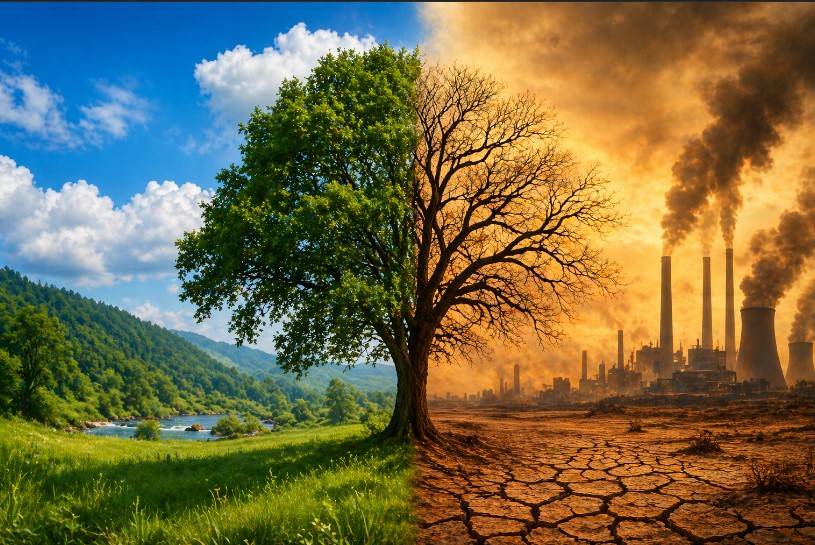
Global warming has become one of the most discussed environmental issues in the modern world. From rising temperatures to changing weather patterns, its effects are being felt across ecosystems, economies, and communities. Yet many people still ask a basic but important question: what is global warming and why is it increasing?
Understanding this issue begins with knowing that global warming is not simply about hotter summers. It refers to the long-term rise in Earth’s average surface temperature, largely driven by human activities. Moreover, this warming trend is linked to broader climate changes that affect life around the globe.
As concerns grow, learning about global warming has become essential for students, professionals, policymakers, and everyday citizens alike.
What Is Global Warming?
Global warming refers to the gradual increase in the Earth’s average temperature over time.
This warming mainly happens because heat-trapping gases accumulate in the atmosphere and make it harder for heat to escape into space.
These gases are often called greenhouse gases.
Major greenhouse gases include:
- Carbon dioxide
- Methane
- Nitrous oxide
- Water vapor
- Fluorinated gases
Although some greenhouse gases occur naturally, human activities have increased their concentrations significantly.
As a result, more heat is trapped in the atmosphere.
Understanding the Greenhouse Effect
To understand global warming, it helps to understand the greenhouse effect.
The greenhouse effect is a natural process that helps keep Earth warm enough for life.
How It Works
- Sunlight reaches Earth.
- Some energy is absorbed by land and oceans.
- Some heat radiates back toward space.
- Greenhouse gases trap part of that heat.
Without this natural effect, Earth would be too cold for life as we know it.
However, problems arise when excessive greenhouse gases intensify this effect.
This is often called the enhanced greenhouse effect.
Consequently, Earth warms beyond natural patterns.
Global Warming vs Climate Change
People often use these terms interchangeably, but they are related rather than identical.
Global Warming
Global warming specifically refers to rising average global temperatures.
Climate Change
Climate change includes broader long-term shifts linked to warming, such as:
- Changing rainfall patterns
- Stronger storms
- Heatwaves
- Melting ice
- Sea level rise
- Ecosystem disruptions
Therefore, global warming is a major driver of climate change.
Why Is Global Warming Increasing?
Global warming is increasing largely because greenhouse gas emissions continue rising.
Several factors contribute.
Burning Fossil Fuels
One of the biggest causes is fossil fuel use.
Burning coal, oil, and natural gas releases carbon dioxide.
These fuels are used in:
- Electricity generation
- Transportation
- Manufacturing
- Heating systems
Because modern economies depend heavily on energy, emissions remain high.
As a result, warming increases.
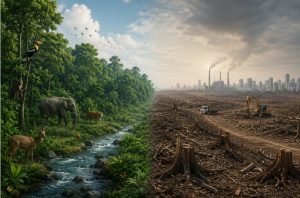
Deforestation
Forests absorb carbon dioxide.
However, cutting forests reduces this natural carbon storage.
Deforestation may occur for:
- Agriculture
- Urban growth
- Logging
- Infrastructure expansion
Therefore, fewer trees mean less carbon absorption and often higher emissions.
Industrial Emissions
Industries can release greenhouse gases through:
- Cement production
- Chemical processes
- Energy use
- Manufacturing emissions
Industrial growth has contributed significantly to warming.
Agriculture and Livestock
Agriculture can also contribute.
Sources may include:
- Methane from livestock
- Fertilizer emissions
- Land-use changes
- Rice cultivation emissions
Because methane is a potent greenhouse gas, it matters greatly.
Population Growth and Consumption
Growing populations may increase demand for:
- Energy
- Transport
- Food production
- Consumer goods
As consumption rises, emissions may rise too.
Urbanization
Cities often contribute through:
- Energy demand
- Construction emissions
- Transportation systems
- Heat island effects
Therefore, rapid urbanization can influence warming trends.
The Role of Carbon Dioxide
Carbon dioxide often receives major attention because it is a leading driver of global warming.
It is released through:
- Burning fossil fuels
- Deforestation
- Industrial activity
Once in the atmosphere, carbon dioxide can remain for long periods.
As a result, emissions can affect climate for decades or longer.
Why Methane Matters Too
Carbon dioxide is not the only concern.
Methane is also important.
Major methane sources include:
- Livestock
- Landfills
- Fossil fuel extraction
- Wetland disturbances
Although methane behaves differently than carbon dioxide, it can trap significant heat.
Therefore, reducing methane emissions is often discussed in climate strategies.
Signs Global Warming Is Increasing
Scientists study many indicators of warming.
Evidence may include:
Rising Global Temperatures
Average global temperatures have risen over time.
This is a key sign of warming.
Melting Glaciers and Ice
Ice loss in glaciers and polar regions is widely observed.
This may affect sea levels and ecosystems.
Rising Sea Levels
Warming contributes to sea level rise through:
- Ice melt
- Ocean expansion as water warms
This can affect coastal regions.
More Frequent Heatwaves
Extreme heat events have become a growing concern in many regions.
Changing Weather Patterns
Some areas may experience:
- Droughts
- Heavy rainfall
- Storm intensity changes
These shifts may be linked to broader climate changes.
Human Activities and Accelerated Warming
Natural climate changes have happened throughout Earth’s history.
However, scientists emphasize that current warming is occurring unusually fast.
One reason concern is growing is the rate of change.
Human activity is widely recognized as a major driver.
That makes solutions possible as well.
Why Global Warming Is a Global Issue
Global warming affects more than one country.
It influences shared systems such as:
- Oceans
- Atmosphere
- Food systems
- Water resources
- Biodiversity
Because these systems cross borders, global warming is a global challenge.
How Global Warming Affects Ecosystems
Warming may affect ecosystems in many ways.
Possible impacts include:
- Habitat shifts
- Species stress
- Coral reef decline
- Changing migration patterns
- Biodiversity threats
Because ecosystems are interconnected, disruptions may spread widely.
Global Warming and Human Health
Environmental changes can affect people too.
Potential concerns may include:
- Heat stress
- Air quality issues
- Water challenges
- Food insecurity risks
- Disease pattern shifts
Therefore, global warming can be both an environmental and public health issue.
Economic Effects of Global Warming
Climate impacts may affect economies through:
- Agricultural losses
- Infrastructure damage
- Disaster recovery costs
- Resource pressures
As impacts grow, economic concerns often grow as well.
Common Myths About Global Warming
Myth It Is Just Natural Weather Variation
Weather changes naturally, but global warming refers to long-term temperature trends.
Myth Cold Weather Means No Global Warming
Short-term cold events do not cancel long-term warming trends.
Myth It Only Affects Polar Regions
Global warming affects ecosystems and communities worldwide.
Myth It Is Only a Future Problem
Many impacts are already being discussed today.
Understanding these myths helps improve awareness.
Why Awareness About Global Warming Matters
Understanding global warming matters because awareness can support:
- Better decisions
- Sustainable choices
- Policy action
- Innovation
- Environmental responsibility
Education often drives solutions.
Can Global Warming Be Slowed?
Many experts focus not only on risks but also on solutions.
Strategies often discussed include:
- Cleaner energy use
- Forest conservation
- Sustainable transport
- Emission reductions
- Climate adaptation planning
Although challenges are significant, action remains possible.
The Role of Individuals
Large-scale systems matter.
However, individual choices may contribute too.
Examples may include:
- Energy conservation
- Sustainable consumption
- Waste reduction
- Environmental awareness
Small actions can support broader efforts.
Why Global Warming Discussions Continue Growing
Interest continues rising because global warming touches many fields, including:
- Environmental science
- Engineering
- Public policy
- Agriculture
- Public health
As a result, it has become a major global conversation.
The Importance of Climate Education
Climate education helps people:
- Understand causes
- Recognize impacts
- Explore solutions
- Make informed choices
Therefore, education is often seen as part of climate action.
Environmental Impacts of Global Warming
Global warming does not only raise temperatures. It affects natural systems in many connected ways. Therefore, its impacts may reach far beyond weather alone.
As warming increases, environmental changes may become more visible.
These changes can affect ecosystems, resources, and human communities.
Rising Temperatures and Heatwaves
One of the clearest effects of global warming is rising temperature.
Many regions are experiencing:
- Longer hot seasons
- More frequent heatwaves
- Higher extreme temperatures
- Warmer average conditions
Because heat affects water, agriculture, and health, these shifts matter greatly.
Moreover, prolonged heat can increase pressure on ecosystems.
Melting Glaciers and Polar Ice
Warming temperatures may contribute to large-scale ice loss.
This includes:
- Mountain glaciers
- Arctic ice
- Antarctic ice sheets
As ice melts, several concerns may grow.
These may include:
- Sea level rise
- Habitat disruption
- Water supply impacts in some regions
Therefore, ice loss is often discussed as a major climate concern.
Rising Sea Levels
Sea levels may rise for two major reasons.
Melting Land Ice
Glaciers and ice sheets add water to oceans.
Thermal Expansion
As ocean water warms, it expands.
Together, these processes may contribute to rising seas.
Potential impacts may include:
- Coastal erosion
- Flooding risks
- Threats to low-lying regions
- Pressure on coastal communities
As a result, sea level rise is a growing concern worldwide.
Changing Rainfall Patterns
Global warming may influence rainfall patterns.
Some areas may experience:
- Heavier rainfall
- Stronger floods
- Longer droughts
- Seasonal shifts
Because water systems support agriculture and communities, these changes can be significant.
Extreme Weather Events
Climate discussions often include extreme weather.
While weather events involve many factors, warming may influence conditions linked with:
- Stronger storms
- Heat extremes
- Drought risks
- Flood events
Therefore, global warming is often connected to concerns about climate extremes.
Global Warming and Oceans
Oceans absorb large amounts of heat.
Because of this, warming affects marine systems too.
Ocean Warming
Warmer oceans may affect:
- Marine ecosystems
- Fish populations
- Coral reefs
- Weather systems
As a result, ocean warming may have wide effects.
Coral Reef Stress
Coral reefs are sensitive to temperature changes.
Warming may contribute to coral stress and reef decline.
Because reefs support biodiversity, these changes matter beyond oceans alone.
Ocean Acidification
Carbon dioxide affects more than the atmosphere.
Some is absorbed by oceans.
This may contribute to ocean acidification, which can affect marine organisms.
Therefore, global warming is linked to multiple ocean changes.
Effects on Biodiversity
Species often depend on stable environmental conditions.
When temperatures shift, habitats may change.
Possible impacts may include:
- Habitat loss
- Migration pattern changes
- Species stress
- Biodiversity decline
Because ecosystems are interconnected, these changes may spread widely.
Global Warming and Agriculture
Agriculture depends heavily on climate stability.
Warming may affect:
- Crop productivity
- Water availability
- Soil conditions
- Growing seasons
In some regions, these pressures may raise food security concerns.
Therefore, agriculture is closely linked to climate discussions.
Water Resources and Global Warming
Water systems may also be affected.
Potential concerns include:
- Drought pressure
- Glacier-fed water changes
- Flood risks
- Resource shortages
Because water supports nearly every sector, these effects can be far-reaching.
Human Health Impacts
Global warming may affect health in several ways.
Possible concerns may include:
- Heat-related illness
- Air quality challenges
- Water-related risks
- Food insecurity pressures
- Disease pattern changes
Therefore, climate change is often discussed as a public health issue too.
Economic Effects of Global Warming
Environmental changes may also affect economies.
Possible impacts may include:
- Crop losses
- Infrastructure damage
- Disaster recovery costs
- Supply chain disruptions
As risks grow, economic concerns may increase.
Global Warming and Vulnerable Communities
Climate impacts are not always felt equally.
Some communities may face greater risks due to:
- Geography
- Limited resources
- Dependence on climate-sensitive livelihoods
Therefore, global warming is often discussed alongside equity concerns.
Why Global Warming Continues Increasing
Despite growing awareness, warming may continue because emissions remain high.
Several reasons contribute.
Continued Fossil Fuel Dependence
Many economies still rely heavily on fossil fuels.
These support:
- Transport
- Industry
- Electricity systems
Because transition takes time, emissions remain a challenge.
Deforestation Continues
Forest loss may continue in many regions.
This can reduce carbon absorption while increasing emissions.
Therefore, forest protection remains important.
Industrial Growth and Demand
As economies expand, demand often rises for:
- Energy
- Infrastructure
- Goods production
Without sustainable shifts, emissions may rise.
Consumer Lifestyles
Patterns of consumption may also matter.
Higher resource demand can increase environmental pressure.
Therefore, sustainability discussions often include consumption habits.
Can Global Warming Be Reduced?
Although the challenge is significant, solutions are widely discussed.
Renewable Energy
Cleaner energy sources may help reduce emissions.
Examples include:
- Solar energy
- Wind power
- Hydropower
- Other low-emission technologies
Energy transition is often seen as a major strategy.
Energy Efficiency
Using energy more efficiently may help lower emissions.
This may involve:
- Efficient buildings
- Cleaner technologies
- Smarter systems
Even efficiency improvements may matter.
Forest Conservation
Protecting forests may support:
- Carbon storage
- Biodiversity
- Ecosystem resilience
Therefore, conservation is often part of climate strategies.
Sustainable Transportation
Transport emissions are often discussed in climate planning.
Strategies may include:
- Public transport
- Cleaner vehicle technologies
- Sustainable mobility systems
These may support emission reduction.
Climate Adaptation
Alongside reducing warming, adaptation matters too.
Adaptation may involve preparing for impacts through:
- Resilient infrastructure
- Water planning
- Disaster preparedness
- Agricultural adaptation
Because some impacts are already occurring, adaptation is important.
The Role of Innovation
Technology may play a growing role in climate solutions.
Innovation may support:
- Cleaner energy systems
- Better resource management
- Lower emissions technologies
Therefore, innovation is often part of future climate planning.
Global Cooperation and Climate Action
Because global warming crosses borders, cooperation matters.
Climate action often involves:
- International agreements
- National policies
- Research collaboration
- Shared sustainability goals
Global issues often need global responses.
What Individuals Can Do
System-level action is crucial.
However, individuals may support change too.
Examples may include:
- Conserving energy
- Reducing waste
- Supporting sustainable choices
- Raising awareness
Small actions alone may not solve global warming, but they can contribute.
Common Myths About Climate Solutions
Myth It Is Too Late to Act
Many experts emphasize action still matters.
Myth Individual Choices Do Not Matter
Individual choices may support broader cultural and policy shifts.
Myth Technology Alone Will Solve Everything
Technology may help, but broader changes are often needed too.
Understanding solutions realistically is important.
Why Climate Awareness Matters More Than Ever
Awareness can support:
- Informed decisions
- Better policies
- Innovation
- Responsible choices
Because understanding often drives action, education remains important.
Long-Term Solutions to Global Warming
Understanding global warming is important, but understanding solutions is equally important. While the challenge is serious, many strategies are being explored to reduce warming and support a more sustainable future.
Because global warming has multiple causes, solutions often involve many approaches working together.
Transition to Clean Energy
One of the most discussed climate solutions is cleaner energy.
Since fossil fuels are major sources of greenhouse gas emissions, reducing dependence on them may help slow warming.
Cleaner energy options may include:
- Solar energy
- Wind energy
- Hydropower
- Geothermal energy
As cleaner technologies grow, emissions may be reduced.
Therefore, energy transition is often seen as a major climate strategy.
Energy Efficiency and Conservation
Reducing emissions is not only about producing cleaner energy.
It is also about using energy more efficiently.
Energy efficiency may involve:
- Efficient buildings
- Improved appliances
- Smarter transport systems
- Industrial efficiency improvements
Because lower energy waste can reduce emissions, efficiency matters.
Sustainable Transportation
Transportation contributes significantly to emissions.
Therefore, sustainable transport solutions are often part of climate discussions.
These may include:
- Public transportation
- Electric mobility
- Cleaner fuels
- Urban transport planning
As cities grow, transportation choices may influence future emissions.
Protecting Forests and Ecosystems
Forests play a major role in absorbing carbon dioxide.
Because of this, protecting ecosystems is often viewed as part of climate action.
Important strategies may include:
- Forest conservation
- Reforestation
- Sustainable land use
- Ecosystem restoration
In addition, healthy ecosystems support biodiversity and resilience.
Sustainable Agriculture and Climate Solutions
Agriculture can be affected by climate change, but it can also be part of solutions.
Sustainable agricultural approaches may focus on:
- Soil health
- Efficient water use
- Lower-emission practices
- Conservation-based farming
Because food systems matter globally, sustainable agriculture is often part of long-term planning.
Reducing Greenhouse Gas Emissions
Reducing emissions remains central to slowing global warming.
This may involve efforts in:
- Energy systems
- Industry
- Transport
- Agriculture
- Buildings
Because emissions come from many sectors, broad action matters.
The Role of Climate Policy
Policy often shapes large-scale change.
Climate-related policies may support:
- Emission reduction goals
- Cleaner technology adoption
- Environmental protections
- Sustainable development planning
Therefore, policy is often considered a key part of climate solutions.
Global Cooperation and Climate Agreements
Global warming affects all countries.
Because climate systems cross borders, cooperation matters.
International collaboration may involve:
- Shared climate commitments
- Research partnerships
- Sustainability initiatives
- Emission reduction efforts
Global challenges often need collective responses.
Innovation and Climate Technology
Technology may support climate solutions in many ways.
Innovation may help improve:
- Renewable energy systems
- Storage technologies
- Cleaner industrial methods
- Resource efficiency
As innovation advances, opportunities may expand.
Therefore, technology is often seen as part of climate progress.
Climate Adaptation for a Changing World
Reducing warming is critical.
However, adaptation is also important.
Because some climate impacts are already occurring, adaptation may help communities prepare.
Adaptation strategies may include:
- Water management planning
- Climate-resilient infrastructure
- Disaster preparedness
- Agricultural adaptation
As a result, adaptation often works alongside mitigation.
Education and Climate Awareness
Education plays a major role in climate action.
It may help people:
- Understand causes of warming
- Recognize impacts
- Explore solutions
- Make informed decisions
Because awareness can drive action, climate education matters.
The Role of Individuals in Climate Action
System-level changes are essential.
Still, individuals may support broader efforts.
Possible actions may include:
- Conserving energy
- Reducing waste
- Supporting sustainability
- Making environmentally aware choices
Although individual actions alone may not solve global warming, they may contribute to wider change.
Why Sustainability Matters
Climate discussions often connect with sustainability.
Sustainability focuses on meeting present needs while protecting future generations.
This may involve:
- Responsible resource use
- Environmental protection
- Long-term planning
Therefore, sustainability and climate action are closely linked.
Challenges in Addressing Global Warming
Climate solutions exist, but challenges remain.
These may include:
- Energy transition complexity
- Economic pressures
- Policy differences
- Resource limitations
Because climate action is complex, progress may require ongoing effort.
Why Urgency Is Often Discussed
Many discussions emphasize urgency because delays may increase risks.
Acting earlier may support:
- Lower emissions
- Reduced impacts
- Greater resilience
Therefore, timing often matters in climate strategies.
Common Myths About Climate Action
Myth Individual Action Does Not Matter
Individual choices may help support broader cultural and policy shifts.
Myth Climate Solutions Hurt Development
Many approaches aim to support sustainability and development together.
Myth It Is Too Late to Reduce Warming
Many experts stress that actions taken now still matter.
Understanding these myths can support better discussion.
The Future of Climate Action
Climate action is likely to keep evolving.
Future progress may involve:
- Cleaner technologies
- Stronger sustainability policies
- Greater international cooperation
- Expanded innovation
Because climate challenges continue, solutions will likely continue evolving too.
Global Warming and Future Generations
Climate discussions often focus not only on present impacts but also future generations.
Decisions made today may influence:
- Ecosystems
- Resources
- Communities
- Environmental stability
Therefore, long-term thinking matters.
Why Global Warming Awareness Is Important
Awareness matters because it can support:
- Better choices
- Scientific understanding
- Responsible policy
- Sustainable innovation
In many ways, understanding is the foundation of action.
Building a More Sustainable Future
Addressing global warming often involves combining many strategies:
- Cleaner energy
- Conservation
- Innovation
- Sustainable development
- Climate resilience
Together, these may support a healthier future.
Global Warming as a Shared Responsibility
One reason climate action is often emphasized is that responsibility can exist at many levels.
It may involve:
- Governments
- Industries
- Communities
- Individuals
Because many sectors influence emissions and sustainability, shared effort matters.
Opportunities Within Climate Challenges
Although global warming presents major challenges, it may also drive innovation.
It may encourage growth in areas such as:
- Green technology
- Sustainable engineering
- Environmental education
- Climate research
Therefore, responses to climate change may also create opportunities.
Final Thoughts
Global warming is increasing largely because greenhouse gas emissions continue rising. However, understanding the causes also helps reveal solutions.
From cleaner energy and forest protection to innovation, policy, and sustainable living, many strategies are being explored to reduce warming and support climate resilience.
Although challenges remain, informed action can help shape a more sustainable future.
Understanding global warming is not only about recognizing risks. It is also about understanding responsibility, solutions, and possibility.
FAQs:
Global warming is the long-term increase in Earth’s average surface temperature, mainly caused by rising greenhouse gas emissions from human activities.
Global warming is increasing due to factors such as burning fossil fuels, deforestation, industrial emissions, agriculture, and growing energy demand.
Major causes of global warming include carbon dioxide emissions, methane emissions, deforestation, industrial activities, and unsustainable resource use.
The greenhouse effect is a natural process where certain gases trap heat in Earth’s atmosphere. Global warming increases when this effect becomes stronger due to excess emissions.
Global warming refers to rising global temperatures, while climate change includes broader environmental changes such as shifting weather patterns and sea level rise.
Global warming may affect ecosystems through rising temperatures, melting ice, sea level rise, biodiversity loss, and changing weather patterns.