Introduction
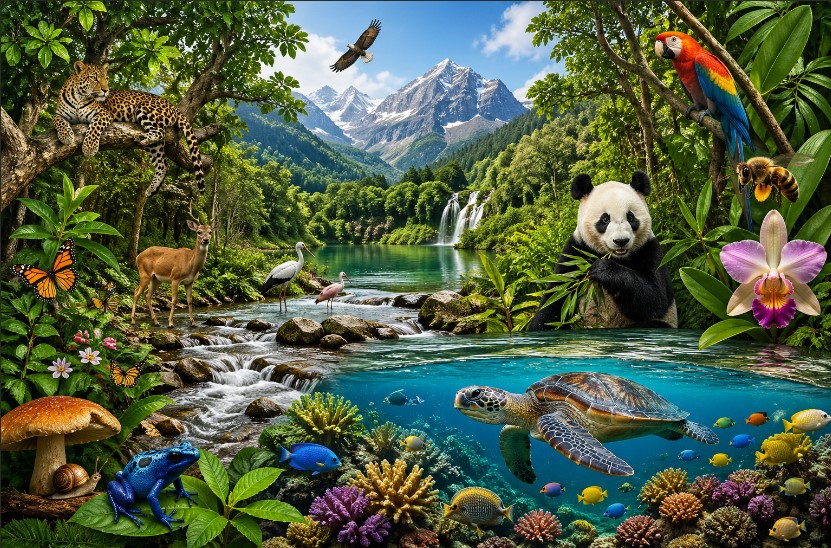
Biodiversity is the foundation of life on Earth. It includes every living organism, from tiny microorganisms in the soil to giant trees in forests and marine creatures in oceans. It also covers the ecosystems where these species live and interact. Biodiversity supports ecological balance, sustains food chains, regulates climate, and provides humans with food, medicine, and resources.
Today, biodiversity faces serious threats due to habitat destruction, pollution, climate change, and overexploitation of natural resources. As these pressures grow, understanding biodiversity and its different forms becomes more important than ever.
This article explores the major types of biodiversity and explains why they matter for nature, ecosystems, and human survival.
What Is Biodiversity?
The term biodiversity is a short form of “biological diversity.” It refers to the variety of life found on Earth. This variety includes differences among species, genes, and ecosystems.
Biodiversity is not limited to tropical forests or wildlife reserves. It exists everywhere—gardens, deserts, rivers, grasslands, wetlands, and even urban spaces.
Biodiversity includes:
- Plants
- Animals
- Fungi
- Microorganisms
- Ecosystems
- Genetic variations within species
All these elements work together to support healthy and functioning ecosystems.
Understanding the Main Types of Biodiversity
Biodiversity is commonly divided into three major types:
- Genetic Diversity
- Species Diversity
- Ecosystem Diversity
Each type has unique importance and contributes to ecological stability.
Genetic Diversity
Genetic diversity refers to variations in genes within the same species. These differences make individuals unique and help species adapt to environmental changes.
What Is Genetic Variation?
Genes carry inherited traits. Within a species, individuals may differ in:
- Size
- Color
- Disease resistance
- Growth rate
- Reproductive ability
- Tolerance to heat, drought, or cold
For example, different varieties of rice may survive under different climatic conditions. Similarly, some animal populations may resist diseases better than others.
Importance of Genetic Diversity
Adaptation to Environmental Changes
Genetic variation allows species to adapt to changing conditions. When climate shifts or new diseases appear, populations with greater diversity have better survival chances.
Disease Resistance
Low genetic diversity can make populations vulnerable to diseases. Diverse gene pools help species withstand epidemics and reduce extinction risks.
Agricultural Benefits
Crop varieties and livestock breeds depend on genetic diversity. It supports:
- Better yields
- Pest resistance
- Drought tolerance
- Improved nutrition
Farmers rely on this diversity for food security.
Evolution and Survival
Evolution depends on genetic variation. Without it, species struggle to adapt and survive over time.
Examples of Genetic Diversity
Crop Diversity
Traditional farming often uses many crop varieties. For example:
- Different wheat strains
- Multiple rice varieties
- Diverse maize species
These varieties protect agriculture against environmental stress.
Animal Breeds
Domestic animals also show genetic diversity:
- Indigenous cattle breeds
- Different sheep varieties
- Poultry breeds with unique traits
These variations support resilience.
Wild Species Populations
Even within wild species, populations vary. Tigers in different regions may show adaptations to local habitats.
Threats to Genetic Diversity
Several human activities reduce genetic diversity.
Monoculture Farming
Growing a single crop variety over large areas reduces variation and increases vulnerability.
Habitat Fragmentation
When habitats are broken into isolated patches, populations shrink and lose diversity.
Inbreeding
Small populations often breed within limited groups, reducing healthy genetic variation.
Climate Change
Rapid environmental changes may outpace species’ ability to adapt.
Species Diversity
Species diversity refers to the variety and abundance of species in a particular region or ecosystem.
It includes:
- Number of species present
- Relative abundance of species
- Distribution of species
A region with many well-balanced species has high species diversity.
Components of Species Diversity
Species Richness
Species richness means the number of different species in an area.
For example:
A forest with:
- 100 bird species
- 40 mammal species
- 200 insect species
has high species richness.
Species Evenness
Evenness refers to how evenly individuals are distributed among species.
An ecosystem dominated by one species may have lower ecological balance than one where many species share similar populations.
Why Species Diversity Matters
Maintains Ecological Stability
Ecological stability depends on the diverse roles species perform within an ecosystem. Each organism contributes in a unique way to keeping natural systems balanced and functioning.
For example:
- Pollinators help plants reproduce and support food production.
- Decomposers break down organic matter and return nutrients to the soil.
- Predator species help control pest populations naturally.
- Seed-dispersing animals assist in plant regeneration and forest growth.
Because these roles are interconnected, biodiversity helps ecosystems remain healthy, resilient, and balanced.
Strengthens Food Chains
Species diversity supports interconnected food webs.
Example:
Plants feed herbivores.
Herbivores feed carnivores.
Decomposers recycle nutrients.
If one species disappears, many others may be affected.
Increases Ecosystem Resilience
Diverse ecosystems often recover better after disturbances such as:
- Fires
- Floods
- Droughts
- Disease outbreaks
Greater species diversity increases resilience.
Supports Human Needs
Species provide:
- Food
- Medicines
- Timber
- Fiber
- Fuel
- Economic resources
Many life-saving medicines originated from plants and organisms.
Examples of Species Diversity
Tropical Rainforests
Rainforests contain enormous species diversity.
They host:
- Birds
- Mammals
- Insects
- Amphibians
- Rare plants
A single rainforest may contain thousands of species.
Coral Reefs
Coral reefs support rich marine biodiversity, including fish, corals, mollusks, and crustaceans.
Wetlands
Wetlands support birds, fish, reptiles, and aquatic plants.
They are biodiversity hotspots.
Threats to Species Diversity
Species diversity is declining due to multiple factors.
Habitat Loss
Deforestation and land conversion destroy natural habitats.
Pollution
Air, soil, and water pollution affect species survival.
Overexploitation
Overfishing, hunting, and illegal wildlife trade reduce species populations.
Invasive Species
Non-native species can outcompete native organisms.
Climate Change
Changing temperatures and weather patterns threaten species worldwide.
Ecosystem Diversity
Ecosystem diversity refers to the variety of ecosystems in a region or across Earth.
An ecosystem includes living organisms and their physical environment interacting together.
Examples include:
- Forests
- Grasslands
- Deserts
- Wetlands
- Rivers
- Oceans
- Mountains
Each ecosystem supports different communities of life.
Importance of Ecosystem Diversity
Supports Multiple Life Forms
Different ecosystems provide different habitats.
For example:
- Mangroves support coastal species
- Forests support wildlife and plants
- Grasslands support grazing animals
Together they support global biodiversity.
Maintains Ecological Processes
Ecosystems regulate essential processes such as:
- Nutrient cycling
- Water purification
- Soil formation
- Pollination
- Climate regulation
These services support life.
Provides Natural Resources
Different ecosystems provide:
- Food
- Freshwater
- Fuelwood
- Medicinal plants
- Construction materials
Human societies depend on these resources.
Protects Against Environmental Hazards
Healthy ecosystems reduce risks from:
- Floods
- Soil erosion
- Storm surges
- Desertification
For example, wetlands absorb floodwaters and mangroves protect coastlines.
Examples of Ecosystem Diversity
Forest Ecosystems
Forests may include:
- Tropical rainforests
- Temperate forests
- Boreal forests
Each has unique biodiversity.
Grassland Ecosystems
Grasslands support herbivores, predators, and specialized plants.
Examples include:
- Savannas
- Prairies
- Steppes
Desert Ecosystems
Deserts host highly adapted species that survive extreme conditions.
Aquatic Ecosystems
These include:
- Freshwater ecosystems
- Marine ecosystems
- Estuaries
- Coral reefs
They support immense biodiversity.
Relationship Between the Three Types of Biodiversity
The three types of biodiversity are interconnected.
Genetic Diversity Supports Species Diversity
Healthy gene pools help species survive and evolve.
Species Diversity Strengthens Ecosystems
More species often improve ecosystem stability.
Ecosystem Diversity Protects Species and Genes
Varied ecosystems create habitats that preserve species and genetic resources.
Loss at one level can affect the others.
Why Biodiversity Matters for Nature
Biodiversity is essential because it supports natural systems.
Maintains Ecological Balance
Predators, prey, plants, and decomposers keep ecosystems functioning.
Removing one component can disrupt the whole system.
Supports Pollination
Pollinators such as bees, birds, and butterflies help plants reproduce.
This supports agriculture and natural vegetation.
Recycles Nutrients
Decomposers break down dead matter and return nutrients to soil.
This keeps ecosystems productive.
Regulates Climate
Forests, oceans, and wetlands store carbon and regulate temperature.
Biodiversity contributes to climate stability.
Purifies Air and Water
Plants filter air.
Wetlands and soils help purify water.
These natural services are vital.
Biodiversity and Human Survival
Human well-being depends on biodiversity.
Food Security
Biodiversity supports agriculture, fisheries, and livestock.
It ensures diverse and reliable food sources.
Medicine
Many medicines come from biodiversity.
Plants, fungi, and microbes contribute to medical discoveries.
Livelihoods
Millions depend on biodiversity through:
- Farming
- Forestry
- Fisheries
- Ecotourism
Cultural Value
Biodiversity holds cultural and spiritual importance in many communities.
Biodiversity Hotspots
Some regions contain extraordinary biodiversity and high levels of threatened species.
These are called biodiversity hotspots.
They are important because they:
- Protect rare species
- Preserve ecosystems
- Support conservation priorities
Examples include tropical forests, coral reefs, and mountain ecosystems.
Measuring Biodiversity
Scientists use several methods to study biodiversity.
Common measures include:
- Species counts
- Genetic studies
- Ecosystem mapping
- Diversity indices
These tools help monitor ecosystem health.
Indicators of Healthy Biodiversity
Healthy biodiversity often shows:
- Rich species presence
- Balanced populations
- Healthy habitats
- Functional food webs
- Strong ecosystem resilience
These indicators reflect environmental health.
Role of Biodiversity in Sustainable Development
Biodiversity supports sustainability by balancing environmental, social, and economic needs.
It contributes to:
- Sustainable agriculture
- Climate adaptation
- Water conservation
- Poverty reduction
- Resource management
Protecting biodiversity supports long-term development.
Conservation of Biodiversity
Protecting biodiversity requires multiple approaches.
Protected Areas
National parks and wildlife reserves help conserve species and habitats.
Habitat Restoration
Restoring degraded ecosystems improves biodiversity.
Sustainable Resource Use
Responsible use reduces ecological damage.
Conservation Awareness
Education encourages biodiversity protection.
Community Participation
Local communities often play major roles in conservation.
Why Biodiversity Loss Is a Global Concern
Biodiversity loss affects all life.
Consequences include:
- Species extinction
- Food insecurity
- Ecosystem collapse
- Reduced resilience
- Climate impacts
Protecting biodiversity is therefore a global priority.
Levels of Biodiversity
Biodiversity can also be understood at different levels. These levels help explain how life is organized and connected.
Alpha Diversity
Alpha diversity refers to biodiversity within a particular habitat or ecosystem.
It measures the number of species found in one area.
For example:
A wetland may contain:
- Fish species
- Water birds
- Aquatic plants
- Amphibians
- Insects
The diversity within that wetland represents alpha diversity.
Importance of Alpha Diversity
High alpha diversity often indicates:
- Healthy ecosystems
- Stable food webs
- Better ecological productivity
- Greater resilience to disturbances
It is often used to assess habitat quality.
Beta Diversity
Beta diversity compares species differences between two habitats.
It measures how species composition changes from one ecosystem to another.
For example:
A forest may have different species than a grassland.
That variation reflects beta diversity.
Why Beta Diversity Matters
It helps:
- Understand habitat differences
- Measure ecological change
- Identify conservation priorities
- Track environmental disturbances
High beta diversity often means landscape richness.
Gamma Diversity
Gamma diversity refers to total biodiversity across a large region containing multiple ecosystems.
It combines species diversity across landscapes.
For example:
A region with forests, rivers, wetlands, and grasslands may show high gamma diversity.
Significance of Gamma Diversity
Gamma diversity helps in:
- Regional conservation planning
- Biodiversity assessments
- Landscape management
- Ecosystem protection strategies
It provides a broader ecological picture.
Biodiversity and Ecosystem Services
Biodiversity provides ecosystem services that support life and economies.
These services are often grouped into categories.
Provisioning Services
These are products obtained from ecosystems.
Examples include:
- Food
- Freshwater
- Timber
- Fuel
- Medicinal plants
- Fibers
Biodiversity makes these resources possible.
Regulating Services
These services regulate environmental conditions.
Examples include:
- Climate regulation
- Pollination
- Flood control
- Disease control
- Water purification
- Soil stabilization
These services often go unnoticed but are essential.
Supporting Services
Supporting services maintain ecosystem functions.
They include:
- Nutrient cycling
- Soil formation
- Photosynthesis
- Habitat creation
Without them, other ecosystem services could not exist.
Cultural Services
Biodiversity also offers non-material benefits.
These include:
- Recreation
- Ecotourism
- Spiritual values
- Education
- Cultural identity
- Aesthetic value
Nature has social and emotional importance as well.
Importance of Biodiversity in Different Ecosystems
Forest Biodiversity
Forests contain immense biodiversity.
They support:
- Mammals
- Birds
- Insects
- Fungi
- Trees and understory plants
Why Forest Biodiversity Matters
Forest biodiversity supports:
- Carbon storage
- Rainfall regulation
- Soil protection
- Wildlife habitats
- Medicinal resources
Healthy forests are vital for global ecological stability.
Marine Biodiversity
Oceans contain extraordinary biodiversity.
Marine ecosystems include:
- Coral reefs
- Mangroves
- Seagrasses
- Deep-sea habitats
Importance of Marine Biodiversity
It supports:
- Fisheries
- Oxygen production
- Climate regulation
- Coastal protection
- Food security
Marine biodiversity is essential for planetary health.
Freshwater Biodiversity
Rivers, lakes, ponds, and wetlands support freshwater biodiversity.
Though freshwater systems cover limited area, they support many species.
Why It Matters
Freshwater biodiversity supports:
- Drinking water systems
- Fisheries
- Nutrient cycling
- Flood management
- Wetland productivity
Protecting freshwater habitats is crucial.
Grassland Biodiversity
Grasslands may seem simple but support rich biodiversity.
They provide habitats for:
- Grazing mammals
- Pollinators
- Birds
- Predators
- Native grasses
Ecological Importance
Grasslands help with:
- Soil conservation
- Carbon storage
- Livestock support
- Pollinator conservation
They are often undervalued ecosystems.
Biodiversity and Food Web Stability
Biodiversity keeps food webs balanced.
Every organism has a role.
Examples:
Producers:
- Plants
- Algae
Consumers:
- Herbivores
- Carnivores
- Omnivores
Decomposers:
- Fungi
- Bacteria
All are interconnected.
What Happens When Biodiversity Declines?
Food webs can become unstable.
Possible impacts:
- Predator-prey imbalance
- Pest outbreaks
- Species collapse
- Reduced productivity
Even small losses can trigger larger disruptions.
Biodiversity and Climate Change
Biodiversity and climate are closely linked.
How Biodiversity Helps Fight Climate Change
Healthy ecosystems absorb carbon.
Examples:
Forests store carbon in trees and soils.
Wetlands store large carbon reserves.
Oceans absorb atmospheric carbon.
These systems help reduce climate impacts.
Biodiversity Supports Climate Adaptation
Diverse ecosystems often adapt better to change.
They may better withstand:
- Heat waves
- Droughts
- Storms
- Floods
Biodiversity strengthens natural resilience.
Climate Change Threatens Biodiversity
Climate change also harms biodiversity.
Effects include:
- Habitat shifts
- Coral bleaching
- Species migration
- Extinction risks
- Altered ecosystems
Protecting biodiversity supports climate solutions.
Biodiversity and Soil Health
Healthy soils depend on biodiversity.
Soil organisms include:
- Earthworms
- Microbes
- Insects
- Fungi
These organisms improve soil functions.
Benefits of Soil Biodiversity
Soil biodiversity supports:
- Nutrient cycling
- Fertility
- Water retention
- Crop productivity
- Erosion control
Without biodiversity, soil health declines.
Biodiversity and Pollinators
Pollinators are major biodiversity contributors.
Common pollinators include:
- Bees
- Butterflies
- Birds
- Bats
- Beetles
They support reproduction of many plants.
Why Pollinator Biodiversity Matters
Pollinators help support:
- Crop yields
- Wild plant reproduction
- Food security
- Ecosystem balance
Loss of pollinators affects agriculture and nature.
Role of Biodiversity in Natural Balance
Nature depends on biodiversity for balance.
Predator Control
Predators regulate prey populations.
Without predators:
- Herbivore populations may explode
- Vegetation may decline
- Ecosystems may degrade
Biodiversity prevents such imbalances.
Decomposition and Nutrient Recycling
Decomposers recycle nutrients.
They break down:
- Dead plants
- Animal remains
- Organic waste
This supports ecosystem productivity.
Seed Dispersal
Animals help spread seeds.
Birds and mammals contribute to forest regeneration.
This supports ecosystem renewal.
Biodiversity and Ecological Resilience
Resilience means the ability to recover from disturbances.
Biodiverse ecosystems often recover faster after:
- Fires
- Floods
- Storms
- Droughts
Why Diversity Improves Resilience
If one species declines, others may perform similar ecological roles.
This reduces ecosystem collapse risks.
Functional diversity strengthens resilience.
Biodiversity in Agriculture
Agricultural biodiversity is important for sustainable farming.
It includes:
- Crop diversity
- Livestock diversity
- Soil biodiversity
- Pollinators
- Beneficial insects
Why Agricultural Biodiversity Matters
It supports:
- Pest control
- Soil fertility
- Food security
- Climate adaptation
- Sustainable production
Diverse farms are often more resilient.
Traditional Knowledge and Biodiversity
Indigenous and local communities often protect biodiversity through traditional practices.
Examples include:
- Sacred groves
- Traditional farming systems
- Community forests
- Indigenous conservation methods
These practices often support sustainable biodiversity use.
Biodiversity and Human Health
Human health is linked with biodiversity.
Medicines from Biodiversity
Many medicines originate from:
- Plants
- Fungi
- Marine organisms
- Microbes
Biodiversity supports medical innovation.
Disease Regulation
Healthy ecosystems may help regulate disease vectors.
Biodiversity can sometimes reduce spread of certain diseases.
Nutrition
Diverse food sources support healthier diets.
Biodiversity contributes to nutrition security.
Major Threats Causing Biodiversity Decline
Habitat Destruction
Deforestation, urbanization, and mining damage habitats.
This is a major biodiversity threat.
Pollution
Pollution harms species and ecosystems.
Examples include:
- Plastic pollution
- Chemical contamination
- Air pollution
- Agricultural runoff
These affect biodiversity at multiple levels.
Overuse of Natural Resources
Unsustainable harvesting can reduce biodiversity.
Examples:
- Overfishing
- Illegal logging
- Wildlife exploitation
Responsible use is essential.
Invasive Species
Introduced species may displace native species.
They can alter ecosystem balance.
Unsustainable Development
Poorly planned development may degrade biodiversity-rich areas.
Balancing development and conservation is important.
Why Biodiversity Conservation Cannot Wait
Conservation is urgent because biodiversity loss can be irreversible.
Once species go extinct, they cannot be recovered.
Protecting biodiversity today protects future generations.
Conservation is not only about wildlife.
It protects:
- Food systems
- Water security
- Climate stability
- Ecological balance
- Human livelihoods
Global Biodiversity Patterns
Biodiversity is not distributed equally across the planet. Some regions support far more species than others because of climate, geography, soil, and evolutionary history.
Understanding biodiversity patterns helps explain why some ecosystems need greater conservation attention.
Tropical Regions and High Biodiversity
Tropical regions often contain the highest biodiversity in the world.
Reasons include:
- Warm temperatures year-round
- High rainfall
- Long growing seasons
- Diverse habitats
- Stable climatic conditions
These factors support rich plant and animal life.
Tropical Rainforests
Tropical rainforests are among the most biodiverse ecosystems.
They support:
- Dense vegetation
- Rare wildlife
- Pollinators
- Amphibians
- Insects
- Medicinal plants
Though they cover a small part of Earth’s surface, they support a major share of global species.
Biodiversity in Mountains
Mountain ecosystems also hold remarkable biodiversity.
Changes in altitude create multiple habitats within short distances.
These support:
- Endemic plants
- Specialized animals
- Unique ecological communities
Mountain biodiversity is highly sensitive to environmental change.
Biodiversity in Wetlands
Wetlands are biodiversity-rich ecosystems.
Examples include:
- Marshes
- Swamps
- Peatlands
- Floodplains
They support fish, birds, amphibians, and aquatic vegetation.
Wetlands are also critical for ecosystem services.
Endemic Species and Their Importance
Endemic species occur naturally in only one region.
Examples may include species limited to:
- Islands
- Mountain ranges
- Specific forests
- Unique wetlands
Why Endemic Species Matter
They matter because they:
- Increase regional biodiversity
- Reflect unique evolutionary history
- Support ecological balance
- Often need urgent protection
Loss of endemic species means global extinction.
Keystone Species and Biodiversity
Some species have a much larger ecological role than their population size suggests.
These are called keystone species.
Examples of Keystone Roles
They may:
- Control prey populations
- Maintain vegetation balance
- Shape habitats
- Support food web stability
Removing keystone species can disrupt ecosystems.
Why They Matter
Keystone species help maintain biodiversity by supporting many other organisms.
Their conservation often protects wider ecosystems.
Indicator Species and Environmental Health
Indicator species help reveal ecosystem condition.
Their presence or absence can signal environmental quality.
Examples may include species sensitive to:
- Pollution
- Temperature changes
- Habitat disturbance
Why Indicator Species Matter
They help scientists monitor:
- Ecosystem health
- Biodiversity decline
- Conservation success
- Environmental stress
They act as ecological warning signals.
Biodiversity and Ecological Niches
An ecological niche is the role a species plays in an ecosystem.
It includes:
- Food sources
- Habitat use
- Reproductive role
- Interactions with other species
Different species occupy different niches.
Why Niche Diversity Matters
More niches often support greater biodiversity.
It reduces competition and allows many species to coexist.
This strengthens ecosystem function.
Biodiversity and Evolution
Biodiversity is shaped by evolution.
Over time species adapt, diversify, and form new species.
Processes involved include:
- Natural selection
- Adaptation
- Speciation
- Genetic variation
Biodiversity reflects millions of years of evolutionary history.
Biodiversity and Ecological Interdependence
No species exists in isolation.
Life depends on ecological relationships.
Examples include:
Mutualism
Both species benefit.
Examples:
- Bees and flowering plants
- Fungi and tree roots
Predation
Predators regulate prey populations.
This supports ecological balance.
Competition
Species compete for resources.
This shapes community structure.
Symbiosis
Many organisms survive through close interactions.
These relationships strengthen ecosystems.
Economic Value of Biodiversity
Biodiversity also has major economic importance.
Agriculture
Crop diversity supports food production.
It helps improve:
- Productivity
- Resilience
- Pest management
Fisheries
Aquatic biodiversity supports fishing industries and livelihoods.
Forestry
Biodiverse forests provide:
- Timber
- Non-timber products
- Economic resources
Ecotourism
Wildlife and natural ecosystems support tourism economies.
Conserving biodiversity often supports sustainable livelihoods.
Ethical Value of Biodiversity
Biodiversity has ethical importance beyond human use.
Many believe species have intrinsic value.
That means species deserve existence even apart from economic benefit.
This perspective strengthens conservation ethics.
Biodiversity and Future Generations
Protecting biodiversity is also about intergenerational responsibility.
Future generations need:
- Healthy ecosystems
- Natural resources
- Ecological stability
- Climate resilience
Conservation helps secure that future.
Biodiversity Loss and Extinction
Extinction is a natural process, but current losses are occurring much faster due to human pressures.
Causes of Extinction
Major drivers include:
- Habitat destruction
- Climate change
- Pollution
- Overexploitation
- Invasive species
These pressures often interact.
Effects of Extinction
Species loss can lead to:
- Food web disruption
- Reduced ecosystem stability
- Loss of ecosystem services
- Genetic resource decline
Extinction affects far more than one species.
Biodiversity Conservation Strategies
Protecting biodiversity requires multiple strategies.
In Situ Conservation
In situ conservation protects species in natural habitats.
Examples include:
- National parks
- Wildlife sanctuaries
- Biosphere reserves
- Protected landscapes
This protects ecosystems as well as species.
Ex Situ Conservation
Ex situ conservation protects biodiversity outside natural habitats.
Examples include:
- Seed banks
- Botanical gardens
- Zoos
- Gene banks
These methods support species preservation.
Habitat Restoration
Restoration improves degraded ecosystems.
Examples include:
- Reforestation
- Wetland restoration
- River rehabilitation
- Grassland recovery
Restoration strengthens biodiversity.
Sustainable Resource Management
Sustainable use reduces pressure on ecosystems.
Examples include:
- Sustainable forestry
- Responsible fisheries
- Eco-friendly agriculture
These practices help conserve biodiversity.
Role of Protected Areas
Protected areas are vital biodiversity conservation tools.
They help:
- Preserve habitats
- Protect endangered species
- Maintain ecological processes
- Reduce human pressures
Well-managed protected areas support long-term conservation.
Community Role in Biodiversity Protection
Communities play major roles in conservation.
They can contribute through:
- Habitat protection
- Sustainable practices
- Local conservation initiatives
- Traditional ecological knowledge
Conservation often works best with community participation.
Individual Actions to Protect Biodiversity
People can support biodiversity through everyday choices.
Support Native Plants
Growing native plants can support local biodiversity and pollinators.
Reduce Pollution
Reducing waste and limiting pollution benefits ecosystems.
Use Resources Responsibly
Responsible consumption can lower biodiversity pressure.
Support Conservation Efforts
Supporting conservation organizations can make a difference.
Promote Awareness
Education encourages biodiversity protection.
Small actions can contribute to larger impact.
Biodiversity and Sustainable Development Goals
Biodiversity is linked to sustainable development.
It supports goals related to:
- Climate action
- Clean water
- Food security
- Life below water
- Life on land
Protecting biodiversity supports broader sustainability efforts.
Why Biodiversity Matters for Nature
Nature functions through diversity.
Biodiversity supports:
- Ecological balance
- Productivity
- Adaptation
- Resilience
- Stability
Without biodiversity, ecosystems weaken.
Nature’s ability to sustain life depends on biological diversity.
The Future of Biodiversity Conservation
The future of biodiversity depends on action taken today.
Key priorities include:
- Habitat protection
- Sustainable development
- Climate action
- Restoration efforts
- Strong conservation policies
Protecting biodiversity is both environmental necessity and global responsibility.
Conclusion
Biodiversity includes genes, species, ecosystems, ecological relationships, and evolutionary processes. It shapes the natural world and supports every major ecological function.
From tropical forests to wetlands, from pollinators to keystone species, biodiversity maintains balance and resilience in nature.
Its importance goes beyond wildlife conservation. It supports climate regulation, food security, healthy soils, clean water, and human well-being.
As biodiversity faces increasing threats, conservation becomes essential. Protecting biodiversity means protecting nature’s foundation and ensuring a sustainable future for all life.
Final Thoughts
Understanding the types of biodiversity—genetic, species, and ecosystem diversity—helps reveal how deeply life is interconnected.
Biodiversity matters because nature depends on variety, interaction, and balance.
The more we protect biodiversity, the stronger and healthier our planet remains.
FAQs:
The three main types of biodiversity are genetic diversity, species diversity, and ecosystem diversity. Together they support ecological balance and healthy natural systems.
Biodiversity helps maintain ecological stability, supports food chains, regulates climate, improves soil fertility, and provides essential ecosystem services.
Genetic diversity refers to variations in genes within a species. It helps species adapt to environmental changes and increases survival chances.
Species diversity means the variety and abundance of species in an ecosystem. Greater species diversity often leads to stronger and more resilient ecosystems.
Ecosystem diversity refers to the variety of habitats such as forests, wetlands, deserts, and oceans that support different forms of life.
Different species perform roles like pollination, decomposition, pest control, and seed dispersal, which help maintain ecosystem balance.