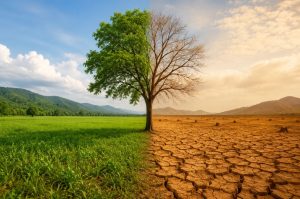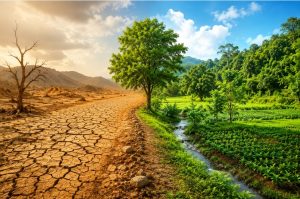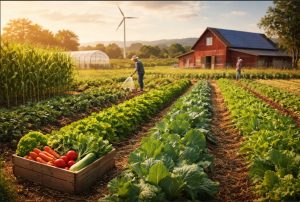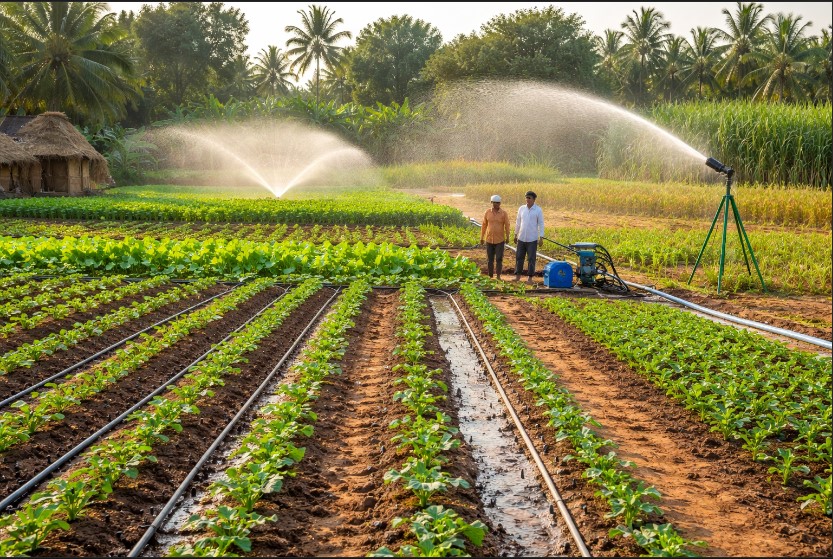
Agriculture in India is deeply dependent on water, yet water scarcity, irregular monsoons, and declining groundwater levels are major challenges for small farmers today. Choosing the right irrigation method is no longer optional—it is essential for improving productivity, saving water, and ensuring sustainable farming.
Small farms, especially those under 2–5 acres, require irrigation systems that are cost-effective, water-efficient, easy to manage, and adaptable to different crops and soil types. Traditional irrigation methods are still widely used, but modern techniques are gradually transforming Indian agriculture.
In this detailed guide, we will explore the best irrigation methods for small farms in India, their advantages, limitations, and suitability.
Understanding Irrigation in Small Farms
Irrigation is the artificial application of water to crops to support their growth. In India, irrigation methods can be broadly divided into:
- Traditional irrigation methods
- Modern irrigation methods (micro-irrigation)
The efficiency of irrigation varies significantly. Traditional flood irrigation has relatively low efficiency, while sprinkler systems are moderately efficient, and drip irrigation offers very high efficiency.
This difference is crucial for small farmers who must make the most of limited water resources.
Factors to Consider Before Choosing an Irrigation Method
Farm Size
Small farms benefit from systems that are easy to install and manage, such as drip irrigation.
Type of Crop
- Fruits and vegetables → Drip irrigation
- Leafy crops → Sprinkler irrigation
Soil Type
- Sandy soil → Needs frequent watering (drip preferred)
- Clay soil → Holds water longer (surface irrigation possible)
Water Availability
If water is limited, micro-irrigation methods are more suitable because they minimize wastage.
Budget
Modern systems require higher initial investment but offer long-term savings.
Drip Irrigation System
Drip irrigation is one of the most efficient and widely recommended methods for small farms in India.
What is Drip Irrigation?
Drip irrigation delivers water directly to the plant roots through pipes and emitters, ensuring minimal wastage.
Key Benefits
- Maximum water efficiency
- Higher crop yield
- Fertigation advantage
- Reduced weed growth
- Suitable for small farms
Limitations
- High initial installation cost
- Requires regular maintenance
- Needs proper filtration system
Best For
- Water-scarce regions
- Small landholdings
- High-value crops
Sprinkler Irrigation System
Sprinkler irrigation mimics natural rainfall by spraying water over crops.
What is Sprinkler Irrigation?
Water is distributed through pipes and sprayed into the air using sprinklers, covering a wide area evenly.
Key Benefits
- Uniform water distribution
- Suitable for uneven land
- Saves labor and time
- Supports better crop growth
Limitations
- Water loss due to evaporation
- Not suitable for very windy areas
- Slightly less efficient than drip irrigation
Best For
- Wheat, pulses, and leafy vegetables
- Medium water availability areas
- Uneven or sandy land
Surface Irrigation (Traditional Method)
Surface irrigation is the oldest and most commonly used method in India.
What is Surface Irrigation?
Water is applied directly to the soil surface and allowed to flow across the field.
Types include:
- Flood irrigation
- Furrow irrigation
- Basin irrigation
Key Benefits
- Low initial cost
- Easy to implement
- Suitable for traditional setups
Limitations
- High water wastage
- Causes waterlogging and soil erosion
- Uneven water distribution
Best For
- Areas with abundant water
- Traditional farming setups
- Clay soils
Rain Gun Irrigation System
Rain gun irrigation is a high-pressure sprinkler system suitable for larger coverage.
What is Rain Gun Irrigation?
It uses powerful sprinklers to distribute water over a large area in a short time.
Key Benefits
- Covers large areas quickly
- Suitable for field crops
- Saves labor
Limitations
- Requires high water pressure
- Higher energy consumption
- Not ideal for very small farms
Best For
- Medium-sized farms
- Crops like maize and sugarcane
- Areas with sufficient water supply
Micro Irrigation Systems (Combined Approach)
Micro irrigation includes drip irrigation, mini sprinklers, and micro jets.
Why Micro Irrigation is Important
Micro irrigation is gaining popularity because it improves water efficiency, supports sustainable farming, and enhances crop productivity.
It is especially important in India due to climate change, groundwater depletion, and irregular rainfall patterns.
Key Advantages
- Very high water efficiency
- Reduces input costs
- Improves farm profitability
Comparison of Irrigation Methods (Overview)
| Method | Water Efficiency | Cost | Best For |
|---|---|---|---|
| Drip Irrigation | Very High | High | Fruits and vegetables |
| Sprinkler Irrigation | Medium-High | Medium | Field crops |
| Surface Irrigation | Low | Low | Traditional farming |
| Rain Gun | Medium | Medium-High | Large fields |
| Micro Irrigation | Very High | Medium-High | Small farms |
Why Small Farmers Should Shift to Modern Irrigation
Small farmers face challenges like limited water supply, rising input costs, and climate uncertainty.
Modern irrigation methods help by:
- Saving water
- Increasing productivity
- Reducing labor
- Improving income
Government support is also encouraging farmers to adopt efficient irrigation systems.
Government Schemes for Irrigation in India
To promote water-efficient farming, the Indian government offers several schemes that support small farmers in adopting modern irrigation systems.
Pradhan Mantri Krishi Sinchai Yojana (PMKSY)
This is one of the most important schemes focused on improving irrigation efficiency.
Key Benefits
- Financial assistance for drip and sprinkler irrigation
- Focus on “Per Drop More Crop” concept
- Helps increase water-use efficiency
Subsidy Details
- Small and marginal farmers can get significant subsidy support
- Coverage includes equipment, installation, and accessories
Micro Irrigation Subsidy Programs
State governments also provide subsidies under micro-irrigation programs.
What Farmers Get
- Subsidy on drip and sprinkler systems
- Technical support and training
- Assistance for installation
These programs reduce the financial burden and encourage farmers to adopt modern systems.
Cost of Irrigation Systems for Small Farms
Understanding the cost is crucial before investing in any irrigation system.
Drip Irrigation Cost
- Moderate to high initial investment
- Cost depends on crop type, spacing, and land size
- Long-term savings on water, fertilizers, and labor
Sprinkler Irrigation Cost
- Moderate cost compared to drip
- Suitable for medium-sized farms
- Lower installation complexity
Surface Irrigation Cost
- Very low initial cost
- No equipment required
- Higher long-term water and labor costs
Rain Gun System Cost
- Medium to high cost
- Requires pump and pressure system
- Suitable for larger coverage
How to Choose the Right Irrigation System
Selecting the right system depends on multiple factors. Here’s a simple guide:
1. Choose Drip Irrigation If:
- You grow fruits or vegetables
- Water availability is limited
- You want higher yield and efficiency
2. Choose Sprinkler Irrigation If:
- You grow field crops like wheat or pulses
- Land is uneven
- Moderate water supply is available
3. Choose Surface Irrigation If:
- Water is abundant
- Budget is very limited
- Traditional farming methods are preferred
Step-by-Step Installation Guide for Drip Irrigation
Installing a drip irrigation system properly ensures maximum efficiency.
1st Step: Field Assessment
- Measure land area
- Identify crop type and spacing
- Check water source
2nd Step: System Design
- Plan layout of pipes and emitters
- Decide water flow and pressure requirements
3rd Step: Purchase Equipment
- Pipes and tubing
- Emitters
- Filters
- Pump (if required)
4th Step: Installation
- Lay main pipeline
- Connect sub-pipes and emitters
- Install filtration system
5th Step: Testing
- Run water through the system
- Check for leaks and blockages
6th Step: Maintenance
- Clean filters regularly
- Check emitters for clogging
- Monitor water pressure
Common Mistakes to Avoid
Even the best irrigation system can fail if not used correctly. Avoid these common mistakes:
Over-Irrigation
Too much water can damage crops and waste resources.
Poor Maintenance
Clogged pipes and emitters reduce efficiency.
Wrong System Selection
Choosing the wrong method for your crop or soil can lead to losses.
Ignoring Soil Type
Different soils require different watering approaches.
Benefits of Efficient Irrigation for Small Farmers
Adopting the right irrigation system can transform farming outcomes.
Increased Crop Yield
Consistent water supply improves plant growth and productivity.
Water Conservation
Efficient systems reduce water wastage significantly.
Reduced Labor Cost
Automation minimizes manual effort.
Better Fertilizer Use
Fertigation improves nutrient efficiency.
Higher Income
Improved yield and reduced costs increase profitability.
Real-Life Success Example (General Scenario)
Many small farmers across India have successfully switched to drip irrigation and experienced:
- Better crop quality
- Reduced water usage
- Increased income
For example, vegetable farmers using drip irrigation often report healthier crops and better market prices due to improved quality.
Future of Irrigation in India
The future of agriculture in India depends on sustainable water management.
Key Trends
- Increasing adoption of micro-irrigation
- Government support and awareness
- Use of smart irrigation technologies
- Integration with solar-powered pumps
These advancements will make irrigation more efficient and accessible for small farmers.
Tips for Maximizing Irrigation Efficiency
- Irrigate early morning or evening to reduce evaporation
- Use mulching to retain soil moisture
- Regularly monitor soil moisture levels
- Maintain equipment properly
- Combine irrigation with proper crop planning
Conclusion
Efficient irrigation is the backbone of successful small-scale farming in India. While traditional methods may still be in use, modern systems like drip and sprinkler irrigation provide better results in terms of water saving, crop yield, and profitability.
With the help of government schemes, improved technology, and proper planning, small farmers can easily adopt these systems and improve their livelihoods.
The key is to choose the right irrigation method based on your farm’s specific needs and manage it effectively.
FAQs:
Drip irrigation is considered the most efficient method because it delivers water directly to plant roots, minimizing wastage and improving crop productivity.
Drip irrigation is the best choice when water is limited, as it uses water very efficiently and reduces evaporation and runoff.
Sprinkler irrigation works well for crops like wheat, pulses, and vegetables, but it may not be ideal for crops that require precise root watering.
The cost depends on farm size, crop type, and materials used. While the initial investment is higher, long-term savings on water and labor make it cost-effective.
Yes, farmers can avail subsidies under various central and state government schemes, especially for drip and sprinkler irrigation systems.
Sprinkler irrigation is most suitable for uneven or sloped land as it distributes water evenly without requiring land leveling.
Yes, surface irrigation can still be useful in areas with abundant water and low budget, but it is less efficient compared to modern methods.