Introduction to Soil Conservation and Erosion Prevention
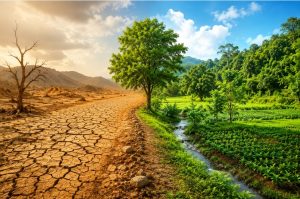
Soil is one of the most valuable natural resources on Earth. It supports agriculture, forests, water systems, biodiversity, and human life. However, soil erosion has become a major environmental challenge across many regions of the world. Because of deforestation, excessive farming, urbanization, mining, and climate change, fertile topsoil is disappearing at an alarming rate.
Soil erosion occurs when the upper layer of soil is removed by wind, water, or human activities. As a result, agricultural productivity declines, water quality worsens, and ecosystems become damaged. Therefore, soil conservation techniques are extremely important for protecting land resources and maintaining environmental balance.
Soil conservation refers to methods and practices used to prevent soil degradation, improve fertility, and reduce erosion. These techniques help preserve topsoil, maintain moisture, and support sustainable agriculture. In addition, proper soil conservation protects rivers, forests, and wildlife habitats from environmental damage.
Today, governments, environmental organizations, farmers, and researchers are focusing more on sustainable land management practices. Consequently, many modern soil conservation methods combine traditional farming knowledge with advanced environmental science.
Understanding Soil Erosion
Soil erosion is the process in which soil particles are detached and transported by natural forces such as wind and water. Although erosion occurs naturally, human activities have significantly accelerated the problem.
Types of Soil Erosion
Different forms of soil erosion affect land in various ways.
Water Erosion
Water erosion is one of the most common types of soil degradation. Heavy rainfall and surface runoff remove fertile topsoil from agricultural fields and barren land.
Water erosion includes:
- Sheet erosion
- Rill erosion
- Gully erosion
- Streambank erosion
Because water carries away nutrients and organic matter, crop productivity may decline rapidly.
Wind Erosion
Wind erosion occurs mainly in dry and semi-arid regions where loose soil particles are blown away by strong winds.
This problem becomes more severe when:
- Vegetation cover is removed
- Soil becomes dry
- Land remains uncultivated
Wind erosion often reduces soil fertility and damages nearby vegetation.
Coastal Soil Erosion
Coastal regions also experience erosion due to waves, storms, and rising sea levels. Consequently, agricultural land and coastal ecosystems may suffer long-term damage.
Human-Induced Soil Erosion
Human activities have accelerated erosion significantly.
Major causes include:
- Deforestation
- Overgrazing
- Mining
- Construction
- Improper farming
- Urban expansion
As natural vegetation disappears, soil becomes more exposed to erosion forces.
Importance of Soil Conservation
Soil conservation plays a major role in environmental sustainability and food security. Without fertile soil, agriculture and ecosystem stability become difficult to maintain.
Protection of Agricultural Productivity
Healthy soil contains nutrients, organic matter, and microorganisms essential for plant growth. Therefore, conserving soil helps improve crop productivity and farming sustainability.
Farmers benefit through:
- Better soil fertility
- Improved moisture retention
- Reduced nutrient loss
- Higher crop yields
Prevention of Land Degradation
Land degradation reduces the quality and productivity of soil. However, conservation practices help maintain land structure and prevent further damage.
This supports long-term agricultural use and environmental stability.
Conservation of Water Resources
Soil erosion often pollutes rivers, lakes, and reservoirs with sediment. Consequently, water quality declines and aquatic ecosystems suffer.
Soil conservation techniques reduce runoff and help improve groundwater recharge.
Support for Biodiversity
Healthy soil supports insects, microorganisms, plants, and wildlife. Therefore, protecting soil also helps conserve biodiversity and ecological balance.
Climate Change Mitigation
Soil stores large amounts of carbon. Proper land management and conservation practices help reduce carbon loss and support climate change mitigation efforts.
Major Causes of Soil Erosion
Understanding the causes of erosion is essential for implementing effective soil conservation techniques.
Deforestation
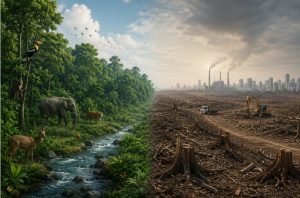
Trees and vegetation protect soil from direct rainfall and wind impact. However, large-scale deforestation removes this protective cover.
As a result:
- Soil becomes loose
- Runoff increases
- Landslides become more common
Deforestation is one of the leading contributors to soil degradation worldwide.
Unsustainable Farming Practices
Improper farming methods often weaken soil structure and increase erosion risk.
Harmful practices include:
- Excessive tillage
- Monocropping
- Overuse of chemicals
- Farming on steep slopes
Therefore, sustainable agriculture is important for erosion prevention.
Overgrazing by Livestock
When animals graze excessively, grass cover decreases and soil becomes exposed.
This can lead to:
- Compacted soil
- Reduced vegetation
- Increased runoff
- Wind erosion
Controlled grazing management helps reduce this problem.
Urbanization and Construction
Construction activities remove vegetation and disturb soil surfaces. Consequently, exposed land becomes highly vulnerable to erosion during rainfall.
Rapid urban expansion often increases sediment pollution in nearby water bodies.
Climate Change and Extreme Weather
Climate change has intensified storms, droughts, and flooding in many regions.
Extreme weather events increase:
- Surface runoff
- Soil displacement
- Riverbank erosion
- Desertification
Therefore, climate-resilient soil conservation strategies are becoming increasingly important.
Soil Conservation Techniques That Help Prevent Erosion
Various soil conservation methods are used worldwide to protect land from degradation and erosion. These techniques improve soil stability while supporting sustainable agriculture and environmental protection.
Contour Farming
Contour farming is a method where crops are planted along the natural contours of slopes rather than up and down the hill.
This technique helps:
- Slow water runoff
- Increase water absorption
- Reduce soil displacement
- Prevent gully formation
Because contour lines act as barriers, soil erosion decreases significantly on sloped land.
Terracing
Terracing involves creating step-like structures on hillsides and mountain slopes.
Farmers use terraces to:
- Reduce runoff speed
- Prevent landslides
- Improve water retention
- Create flat farming surfaces
Terrace farming is commonly used in hilly agricultural regions around the world.
Strip Cropping
Strip cropping involves planting alternating strips of crops and grass or cover plants.
The vegetation strips help:
- Break wind flow
- Reduce water runoff
- Trap soil particles
- Improve soil stability
This method is especially useful in erosion-prone agricultural areas.
Cover Cropping
Cover crops are planted primarily to protect and improve soil rather than for harvesting.
Common cover crops include:
- Clover
- Rye
- Legumes
- Grasses
Cover crops help:
- Prevent soil exposure
- Reduce runoff
- Improve soil fertility
- Increase organic matter
Additionally, they suppress weeds and improve soil moisture retention.
Crop Rotation
Crop rotation involves growing different crops in sequence on the same land.
This technique improves:
- Soil fertility
- Root diversity
- Nutrient balance
- Soil structure
As a result, the land becomes more resistant to erosion and degradation.
Role of Vegetation in Preventing Soil Erosion
Vegetation is one of the most effective natural barriers against erosion. Plants stabilize soil through root systems while protecting land from rain and wind impact.
Importance of Tree Planting
Trees play a major role in soil conservation.
They help by:
- Binding soil with roots
- Reducing wind velocity
- Increasing water infiltration
- Preventing landslides
Afforestation and reforestation programs are therefore essential for erosion control.
Grass and Ground Cover Protection
Grass cover protects exposed land from direct rainfall impact.
Ground vegetation helps:
- Reduce runoff
- Trap sediments
- Improve soil moisture
- Stabilize slopes
Many conservation programs encourage grass planting in erosion-prone regions.
Agroforestry Practices
Agroforestry combines trees with crops or livestock farming.
Benefits include:
- Improved soil fertility
- Better moisture conservation
- Wind protection
- Reduced erosion
This sustainable land-use system supports both agriculture and environmental conservation.
Conservation Tillage and Sustainable Farming
Conservation tillage reduces soil disturbance during farming operations. Traditional plowing often loosens soil excessively and increases erosion risk.
No-Till Farming
No-till farming leaves crop residues on the soil surface instead of plowing deeply.
This method helps:
- Reduce soil erosion
- Improve moisture retention
- Increase organic matter
- Protect soil microorganisms
No-till agriculture is becoming increasingly popular in sustainable farming systems.
Mulching Techniques
Mulching involves covering soil with organic or inorganic materials.
Common mulching materials include:
- Straw
- Leaves
- Wood chips
- Compost
Mulch protects soil from heavy rainfall and extreme temperatures while reducing evaporation.
Organic Farming Practices
Organic farming supports soil health through natural nutrient management and reduced chemical use.
Healthy organic soil generally has:
- Better structure
- Higher microbial activity
- Improved moisture retention
- Greater erosion resistance
Consequently, organic farming contributes to long-term land sustainability.
Importance of Water Management in Soil Conservation
Proper water management plays a major role in preventing soil erosion. When rainwater flows rapidly across land surfaces, it carries away fertile topsoil and nutrients. Therefore, controlling water movement is essential for long-term soil protection.
Effective water conservation techniques help improve moisture retention while reducing runoff and land degradation.
Rainwater Harvesting
Rainwater harvesting involves collecting and storing rainwater for agricultural and environmental use.
This method helps:
- Reduce surface runoff
- Improve groundwater recharge
- Minimize soil erosion
- Support irrigation during droughts
In addition, rainwater harvesting promotes sustainable water management in rural and urban areas.
Check Dams and Small Barriers
Check dams are small structures built across streams or drainage channels to slow water flow.
These structures help:
- Prevent gully erosion
- Reduce flood intensity
- Increase water infiltration
- Trap sediment
Consequently, check dams support both water conservation and soil stability.
Proper Irrigation Practices
Improper irrigation can weaken soil structure and increase erosion risk. However, efficient irrigation systems help conserve both soil and water resources.
Modern irrigation methods include:
- Drip irrigation
- Sprinkler irrigation
- Controlled surface irrigation
These techniques reduce excessive runoff while improving water efficiency.
Drainage Management
Good drainage systems prevent waterlogging and uncontrolled runoff.
Effective drainage helps:
- Maintain soil structure
- Reduce flooding
- Prevent nutrient loss
- Protect agricultural fields
Therefore, proper drainage planning is important for erosion prevention.
Role of Forests in Soil Conservation
Forests are among the most effective natural systems for preventing soil erosion. Tree roots bind soil particles together while forest vegetation reduces the impact of rainfall and wind.
How Forests Protect Soil
Forests help conserve soil in several ways.
They:
- Reduce runoff speed
- Increase water absorption
- Stabilize slopes
- Improve organic matter content
- Reduce wind erosion
As a result, forest ecosystems play a critical role in maintaining healthy land.
Afforestation and Reforestation
Afforestation refers to planting trees in areas that previously lacked forests, while reforestation restores damaged forest regions.
Both practices help:
- Restore degraded land
- Improve biodiversity
- Prevent desertification
- Reduce soil loss
Many environmental conservation programs now focus on large-scale tree plantation projects.
Mangrove Forests and Coastal Protection
Mangrove forests protect coastal regions from erosion caused by waves and storms.
Their root systems help:
- Stabilize shorelines
- Trap sediments
- Reduce coastal land loss
Therefore, mangrove conservation is essential for protecting coastal ecosystems.
Role of Organic Matter in Soil Protection
Organic matter improves soil quality and helps prevent erosion. Healthy soil rich in organic material becomes more stable, fertile, and moisture-retentive.
Benefits of Organic Matter
Organic matter supports:
- Better soil structure
- Increased microbial activity
- Improved moisture retention
- Enhanced nutrient availability
Consequently, soil becomes more resistant to erosion and degradation.
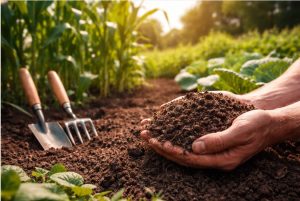
Composting for Soil Conservation
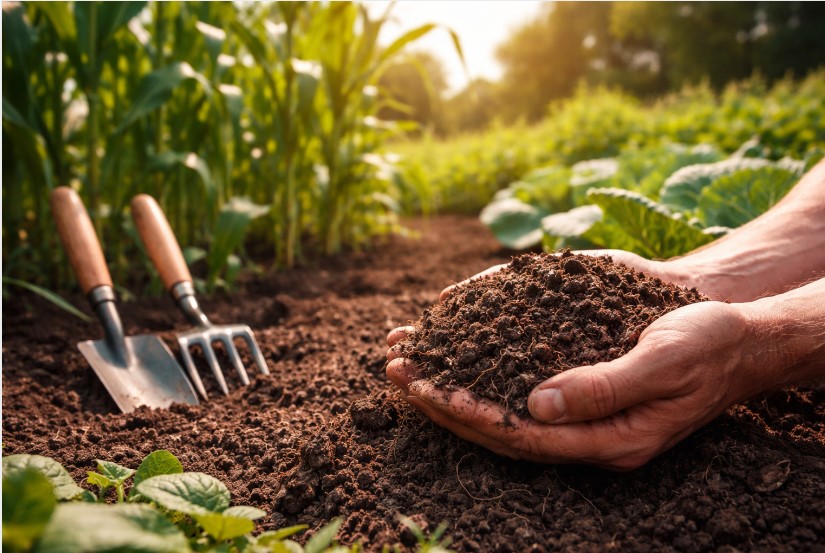
Composting converts organic waste into nutrient-rich material that improves soil health.
Compost helps:
- Increase soil fertility
- Improve water absorption
- Reduce soil compaction
- Support sustainable farming
Farmers often use compost to restore degraded agricultural land naturally.
Green Manure Techniques
Green manure crops are grown specifically to enrich soil.
Common green manure crops include:
- Legumes
- Clover
- Mustard plants
These crops improve soil fertility while protecting exposed land from erosion.
Soil Conservation in Agriculture
Agriculture depends heavily on healthy soil. However, poor farming practices can accelerate land degradation rapidly. Therefore, sustainable agriculture is essential for long-term food security.
Sustainable Farming Practices
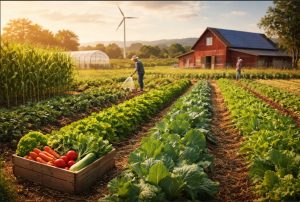
Sustainable farming balances productivity with environmental protection.
Important practices include:
- Crop rotation
- Organic farming
- Reduced tillage
- Integrated nutrient management
These methods improve soil health while minimizing erosion.
Shelterbelts and Windbreaks
Shelterbelts are rows of trees or shrubs planted around farms to reduce wind speed.
Benefits include:
- Reduced wind erosion
- Improved moisture retention
- Crop protection
- Increased biodiversity
Windbreaks are especially useful in dry and semi-arid regions.
Controlled Grazing
Overgrazing damages vegetation cover and weakens soil stability. However, controlled grazing systems help maintain healthy grasslands.
Proper grazing management includes:
- Rotational grazing
- Limiting livestock density
- Protecting vulnerable land
As a result, grasslands remain more resistant to erosion.
Soil Conservation Techniques in Hilly Areas
Hilly and mountainous regions are highly vulnerable to erosion because of steep slopes and heavy rainfall. Therefore, specialized conservation techniques are necessary in these areas.
Terrace Farming
Terrace farming creates flat surfaces on hillsides to reduce water runoff.
This method helps:
- Prevent landslides
- Improve water retention
- Reduce soil displacement
- Increase farming efficiency
Terracing has been used successfully in mountainous agricultural regions for centuries.
Contour Bunding
Contour bunding involves constructing embankments along land contours.
These barriers help:
- Slow water movement
- Increase infiltration
- Prevent soil loss
Consequently, contour bunding improves land stability on sloped terrain.
Vegetative Barriers
Vegetative barriers involve planting grasses or shrubs along slopes to reduce runoff speed.
These plants help trap soil particles while improving moisture retention.
Impact of Climate Change on Soil Erosion
Climate change is increasing the intensity of soil erosion worldwide. Extreme weather events such as heavy rainfall, floods, droughts, and storms place greater pressure on land resources.
Increased Flooding and Runoff
Intense rainfall often causes severe runoff and rapid soil displacement.
Flooding can lead to:
- Loss of fertile topsoil
- Riverbank erosion
- Sediment pollution
- Agricultural damage
Therefore, climate-resilient conservation strategies are becoming increasingly important.
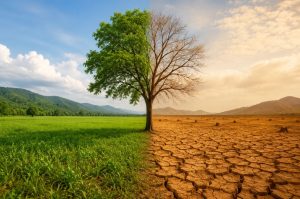
Drought and Desertification
Drought reduces vegetation cover and dries soil surfaces. As a result, land becomes more vulnerable to wind erosion and desertification.
Dry regions often experience:
- Reduced agricultural productivity
- Soil degradation
- Water scarcity
Sustainable land management is essential for protecting vulnerable ecosystems.
Need for Climate-Resilient Soil Conservation
Modern conservation strategies increasingly focus on adapting to climate change.
Key approaches include:
- Agroforestry
- Water harvesting
- Drought-resistant crops
- Reforestation
- Sustainable irrigation
These methods help improve environmental resilience and reduce land degradation.
Government Initiatives for Soil Conservation
Many governments and environmental organizations promote soil conservation through policies, education, and restoration programs.
Watershed Management Programs
Watershed management focuses on protecting land and water resources within drainage areas.
These programs support:
- Rainwater harvesting
- Afforestation
- Soil stabilization
- Sustainable agriculture
As a result, watershed projects improve environmental sustainability and rural livelihoods.
Land Restoration Projects
Governments often implement land restoration programs in degraded regions.
These projects may include:
- Tree plantation
- Grassland restoration
- Erosion control barriers
- Community participation
Restoration initiatives help recover damaged ecosystems and agricultural land.
Farmer Awareness and Training
Education programs help farmers learn sustainable soil management techniques.
Training often covers:
- Organic farming
- Water conservation
- Crop rotation
- Erosion control methods
Therefore, awareness programs play a key role in protecting soil resources.
Economic Benefits of Soil Conservation
Soil conservation not only protects the environment but also supports economic development and agricultural productivity.
Improved Crop Yields
Healthy soil improves nutrient availability and water retention. Consequently, farmers often achieve higher agricultural productivity.
Reduced Farming Costs
Sustainable farming practices may reduce dependence on:
- Chemical fertilizers
- Excessive irrigation
- Soil restoration expenses
This helps improve long-term farm profitability.
Protection of Infrastructure
Erosion can damage roads, dams, irrigation canals, and buildings.
Effective soil conservation reduces infrastructure damage caused by flooding and landslides.
Long-Term Environmental Sustainability
Protecting soil resources supports sustainable agriculture, biodiversity conservation, and climate resilience for future generations.
Community Participation in Soil Conservation
Community involvement is essential for successful soil conservation programs. Although governments and environmental organizations provide support, local participation often determines long-term success.
When communities work together, conservation efforts become more sustainable and effective.
Importance of Local Awareness
People living in erosion-prone regions often experience the direct effects of land degradation. Therefore, spreading awareness about soil conservation is extremely important.
Awareness programs help communities understand:
- Causes of soil erosion
- Benefits of sustainable farming
- Importance of vegetation cover
- Water conservation methods
As a result, individuals become more willing to adopt environmentally friendly practices.
Role of Farmers in Soil Protection
Farmers play a major role in preventing erosion because agricultural land is highly vulnerable to soil degradation.
Farmers can help by:
- Practicing crop rotation
- Using organic fertilizers
- Reducing excessive tillage
- Planting cover crops
- Conserving water resources
Consequently, sustainable farming improves both productivity and environmental protection.
School and Educational Programs
Environmental education encourages younger generations to value natural resource conservation.
Schools and colleges can promote:
- Tree plantation drives
- Soil conservation campaigns
- Environmental workshops
- Sustainable agriculture education
These activities help build long-term environmental responsibility.
Modern Technology in Soil Conservation
Technology is increasingly helping scientists, governments, and farmers manage soil resources more effectively. Furthermore, digital tools now provide better monitoring and planning capabilities.
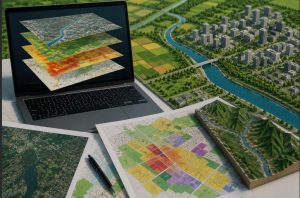
Geographic Information Systems (GIS)
GIS technology helps analyze land conditions and identify erosion-prone areas.
This system supports:
- Land-use planning
- Watershed management
- Soil mapping
- Environmental monitoring
As a result, conservation strategies become more accurate and efficient.
Remote Sensing Technology
Satellites and drones are widely used to monitor environmental changes.
Remote sensing helps track:
- Vegetation cover
- Soil moisture
- Land degradation
- Deforestation patterns
Therefore, governments can respond more effectively to erosion threats.
Precision Agriculture
Precision farming uses digital tools and sensors to optimize agricultural practices.
Benefits include:
- Efficient irrigation
- Controlled fertilizer use
- Reduced soil disturbance
- Better crop management
This approach improves productivity while reducing environmental damage.
Artificial Intelligence in Land Management
Artificial intelligence is beginning to support soil conservation through predictive analysis and environmental monitoring.
AI systems may help:
- Predict erosion risks
- Analyze weather patterns
- Recommend conservation practices
- Improve resource management
As technology advances, digital solutions may play an even larger role in sustainable agriculture.
Challenges in Soil Conservation
Although many conservation techniques are effective, several challenges continue to limit implementation worldwide.
Population Growth and Land Pressure
Growing populations increase demand for food, housing, and infrastructure. Consequently, forests and agricultural land often face excessive pressure.
This may lead to:
- Deforestation
- Overcultivation
- Urban expansion
- Increased land degradation
Therefore, balancing development with environmental protection remains difficult.
Lack of Awareness
In some regions, people may not fully understand the long-term effects of soil erosion.
Without proper education:
- Unsustainable farming may continue
- Vegetation destruction may increase
- Conservation efforts may fail
Awareness programs are therefore essential for promoting sustainable land management.
Financial Limitations
Many soil conservation methods require financial investment and technical support.
Farmers may struggle with:
- High equipment costs
- Limited irrigation access
- Lack of training
- Poor infrastructure
As a result, government assistance and environmental funding become important.
Climate Change Challenges
Climate change continues to intensify droughts, floods, and storms worldwide.
Extreme weather increases:
- Soil displacement
- Water scarcity
- Desertification
- Agricultural losses
Consequently, conservation strategies must adapt to changing environmental conditions.
Global Importance of Soil Conservation
Soil conservation is not only a local agricultural issue but also a global environmental priority. Healthy soil supports food production, biodiversity, water quality, and climate stability worldwide.
Food Security and Agriculture
Agriculture depends heavily on fertile topsoil. However, continuous erosion threatens food production systems in many countries.
Protecting soil helps:
- Maintain crop yields
- Improve farming sustainability
- Reduce hunger risks
- Support rural economies
Therefore, soil conservation is essential for long-term food security.
Biodiversity Protection
Healthy soil supports countless organisms including:
- Earthworms
- Insects
- Microorganisms
- Plants
These organisms contribute to ecological balance and nutrient cycling.
As a result, conserving soil also protects biodiversity.
Water Quality Improvement
Erosion often carries sediment and pollutants into rivers and lakes.
This may cause:
- Water pollution
- Reduced aquatic biodiversity
- Dam sedimentation
- Poor drinking water quality
Soil conservation techniques help reduce sediment runoff and improve water systems.
Climate Change Mitigation
Soil acts as a major carbon storage system. Sustainable land management helps retain carbon in the ground instead of releasing it into the atmosphere.
Practices such as:
- Afforestation
- Organic farming
- Agroforestry
- Cover cropping
can support climate change mitigation efforts significantly.
Future of Soil Conservation
The future of soil conservation depends on sustainable development, environmental awareness, and technological innovation. As environmental challenges grow, protecting soil resources will become increasingly important.
Sustainable Agriculture Expansion
Sustainable farming practices are expected to expand worldwide because of rising concerns about land degradation and food security.
Future agricultural trends may include:
- Organic farming
- Regenerative agriculture
- Reduced tillage systems
- Climate-smart agriculture
These approaches support long-term environmental sustainability.
Increased Reforestation Efforts
Many countries are now investing in large-scale tree plantation and land restoration projects.
Reforestation can help:
- Reduce erosion
- Restore biodiversity
- Improve rainfall patterns
- Enhance soil stability
Therefore, global afforestation initiatives may play a major role in future conservation efforts.
Stronger Environmental Policies
Governments are increasingly implementing stricter environmental regulations related to land use and conservation.
Future policies may focus on:
- Sustainable farming incentives
- Forest protection
- Watershed restoration
- Climate adaptation strategies
Such policies can improve long-term land management.
Innovation and Research
Scientific research continues to improve understanding of soil ecosystems and conservation methods.
Future innovations may include:
- Smart irrigation systems
- AI-driven environmental monitoring
- Advanced soil restoration methods
- Sustainable crop development
As research progresses, conservation techniques may become even more effective and accessible.
Conclusion
Soil conservation is essential for protecting the environment, supporting agriculture, and ensuring long-term sustainability. Since soil erosion threatens food security, biodiversity, water quality, and climate stability, effective conservation techniques are more important than ever.
Various methods such as contour farming, terracing, cover cropping, agroforestry, conservation tillage, and rainwater harvesting help prevent soil degradation and maintain land productivity. In addition, forests, vegetation cover, and organic matter play major roles in stabilizing soil and reducing erosion risks.
Although challenges such as climate change, population growth, and financial limitations continue to affect conservation efforts, governments, communities, farmers, and researchers are increasingly working together to promote sustainable land management. Modern technology, environmental awareness, and scientific innovation are also improving soil conservation strategies worldwide.
Protecting soil is not only important for agriculture but also for future generations. Healthy soil supports ecosystems, stores carbon, conserves water, and maintains biodiversity. Therefore, adopting sustainable soil conservation techniques is essential for creating a more resilient and environmentally balanced world.
FAQs:
Soil conservation refers to methods and practices used to protect soil from erosion, degradation, and nutrient loss. It helps maintain soil fertility, agricultural productivity, and environmental balance.
Soil erosion is mainly caused by:
Water runoff
Strong winds
Deforestation
Overgrazing
Improper farming practices
Construction activities
Climate change
These factors remove fertile topsoil and damage land quality.
Soil conservation is important because it helps:
Protect agricultural productivity
Prevent land degradation
Improve water quality
Support biodiversity
Reduce flood risks
Maintain environmental sustainability
Healthy soil is essential for food security and ecosystem stability.
Different techniques work best in different environments. Common and effective methods include:
Contour farming
Terracing
Cover cropping
Crop rotation
Mulching
Agroforestry
Conservation tillage
Often, combining multiple techniques provides better erosion control.
Trees help stabilize soil through their root systems. In addition, forests reduce runoff speed, improve water absorption, and protect land from wind and rainfall impact.
Contour farming is a technique where crops are planted along the natural contours of slopes. This method slows water runoff and helps reduce soil erosion on hilly land.