Introduction
In recent years, organic farming has moved from being a niche practice to a mainstream agricultural movement in India. With rising health awareness, environmental concerns, and demand for chemical-free food, both farmers and consumers are increasingly turning toward organic methods.
India, traditionally an agrarian economy, is witnessing a silent revolution in the way food is grown. Organic farming is not just a trend—it is becoming a necessity. But what exactly is organic farming, and why is it expanding so rapidly across the country?
In this blog, we’ll explore the concept, principles, methods, and benefits of organic farming, along with the reasons behind its rapid growth in India.
What Is Organic Farming?
Organic farming is a method of agriculture that relies on natural inputs and processes instead of synthetic chemicals like pesticides, fertilizers, and genetically modified organisms (GMOs).
It focuses on:
- Maintaining soil fertility naturally
- Promoting biodiversity
- Using eco-friendly pest control methods
- Ensuring sustainable agricultural practices
In simple words, organic farming is about working with nature rather than against it.
Key Principles of Organic Farming
Organic farming is based on four fundamental principles:
Health
Organic farming aims to sustain the health of soil, plants, animals, and humans. It avoids harmful chemicals that can affect human health and ecosystems.
Ecology
It respects natural cycles and ecosystems. Farmers use techniques that mimic natural processes, like crop rotation and composting.
Fairness
Organic farming ensures fairness in terms of environment, labor, and trade. It supports farmers, workers, and consumers equally.
Care
This principle emphasizes precaution and responsibility. Organic farming avoids risky technologies and ensures long-term sustainability.
Methods Used in Organic Farming
Organic farming uses several traditional and modern eco-friendly techniques:
Crop Rotation
Farmers grow different crops in a sequence to maintain soil fertility and prevent pests.
Composting
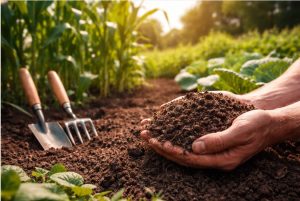
Organic waste like leaves, food scraps, and animal manure is converted into nutrient-rich compost.
Biological Pest Control
Instead of chemical pesticides, farmers use natural predators or organic sprays to control pests.
Green Manuring
Plants like legumes are grown and then plowed back into the soil to improve fertility.
Mulching
Covering soil with organic materials helps retain moisture and suppress weeds.
Benefits of Organic Farming
Organic farming offers multiple benefits—not just for farmers, but for consumers and the environment as well.
Healthier Food
Organic food is free from harmful chemicals, making it safer and more nutritious.
Environmental Protection
It reduces soil and water pollution and helps conserve biodiversity.
Improved Soil Fertility
Natural methods enhance soil structure and long-term productivity.
Better Market Prices
Organic products often fetch higher prices in the market, increasing farmers’ income.
Biodiversity Conservation
Organic farms support various species of plants, insects, and animals.
Challenges in Organic Farming
Despite its benefits, organic farming also faces certain challenges:
- Lower yields initially compared to conventional farming
- Lack of awareness among farmers
- Certification process can be costly and time-consuming
- Limited availability of organic inputs in some regions
- Market access issues for small farmers
However, these challenges are gradually being addressed through government initiatives and increasing awarene
Organic Farming in India: An Overview
India has a long history of traditional farming practices that are inherently organic. Before the Green Revolution, most farming was chemical-free.
Today, India is among the top countries in terms of organic farming area and number of organic producers.
Key highlights:
- Millions of hectares of land under organic cultivation
- States like Sikkim are fully organic
- Increasing export demand for organic products
- Growing domestic market for organic food
Why Is Organic Farming Gaining Popularity?
Organic farming is not growing randomly—it is driven by strong factors that are reshaping agriculture in India.
Rising Health Awareness
People are becoming more conscious about what they eat. The demand for chemical-free fruits, vegetables, and grains is increasing rapidly.
Consumers are now willing to pay more for healthier food options.
Environmental Concerns
Excessive use of chemical fertilizers and pesticides has led to:
- Soil degradation
- Water pollution
- Loss of biodiversity
Organic farming offers a sustainable solution to these problems.
Government Support
The Indian government is promoting organic farming through various schemes such as:
- Paramparagat Krishi Vikas Yojana (PKVY)
- National Programme for Organic Production (NPOP)
These initiatives provide financial support, training, and certification assistance to farmers.
Export Opportunities
India exports organic products like:
- Spices
- Tea
- Coffee
- Rice
Global demand for organic food is increasing, making it a profitable sector.
Changing Consumer Preferenc
Urban consumers, especially in metro cities, prefer organic food due to
- Health benefits
- Better taste
- Environmental consciousness
This shift is pushing retailers and farmers to adopt organic practices
Role of Technology in Organic Farming
Technology is also playing a role in boosting organic farming:
- Mobile apps for organic certification
- Online marketplaces for direct selling
- Digital awareness campaigns
- Precision farming techniques
This combination of traditional methods and modern technology is accelerating growth.
Government Schemes Promoting Organic Farming in India
The rapid growth of organic farming in India is strongly supported by various government initiatives. These schemes aim to encourage farmers to shift from chemical-based farming to sustainable practices.
Paramparagat Krishi Vikas Yojana (PKVY)
This scheme promotes cluster-based organic farming. Farmers are encouraged to form groups and adopt organic methods together.
Key benefits:
- Financial assistance for organic inputs
- Training and capacity building
- Certification support
National Programme for Organic Production (NPOP)
The National Programme for Organic Production ensures the quality and authenticity of organic products in India.
Object
Mission Organic Value Chain Development for North Eastern Region (MOVCDNER)
This scheme focuses on promoting organic farming in the northeastern states of India.
Features:
- Development of organic value chains
- Linking farmers with markets
- Branding and marketing support
Rashtriya Krishi Vikas Yojana (RKVY)
Under Rashtriya Krishi Vikas Yojana, funds are provided to states for agricultural development, including organic farming initiatives.
Successful Examples of Organic Farming in India
Organic farming is not just theory—it is already transforming lives across the country. Let’s look at some inspiring examples.
Sikkim – India’s First Fully Organic State
Sikkim became the first fully organic state in India.
Achievements:
- 100% organic farming practices
- Ban on chemical fertilizers and pesticides
- Boost in tourism and eco-friendly branding
This success shows that large-scale organic farming is possible with strong policy support.
Andhra Pradesh – Community Managed Natural Farming
Andhra Pradesh has adopted large-scale natural farming practices.
Highlights:
- Millions of farmers involved
- Reduced farming costs
- Increased sustainability
Maharashtra – Organic Cotton Farming
Maharashtra farmers are increasingly adopting organic cotton farming.
Benefits:
- Higher export demand
- Better income for farmers
- Reduced environmental damage
Future Scope of Organic Farming in India
Organic farming has immense potential in India, and its future looks promising.
Growing Domestic Market
The demand for organic food in India is rising rapidly, especially in urban areas. Supermarkets and online platforms now have dedicated organic sections.
Export Growth
India is becoming a major exporter of organic products. Countries in Europe and North America are key market 3. Employment Opportunities.
Organic farming creates jobs in:
- Farming
- Processing
- Packaging
- Marketing
Sustainable Agriculture
Organic farming supports long-term agricultural sustainability by preserving natural resources.
Integration with Modern Technology
Future growth will include:
- AI-based farming tools
- Digital marketplaces
- Smart irrigation systems
This integration will make organic farming more efficient and scalable.
How to Start Organic Farming (Step-by-Step Guide)
If someone wants to begin organic farming, here are the basic steps:
Understand the Basics
Learn about organic principles, soil health, and natural inputs.
Select Suitable Crops
Choose crops that grow well in your region and climate.
Prepare the Soil
Use compost, manure, and organic fertilizers to enrich soil.
Use Organic Seeds
Select non-GMO and organic-certified seeds.
Natural Pest Management
Use neem oil, cow urine, or biological pest control methods.
Get Certification
Apply for organic certification through recognized bodies like NPOP.
Find Markets
Sell products through:
- Local markets
- Organic stores
- Online platforms
Organic vs Conventional Farming
| Aspect | Organic Farming | Conventional Farming |
|---|---|---|
| Inputs | Natural | Chemical-based |
| Cost | Lower (long-term) | Higher |
| Yield | Moderate (initially) | High (initially) |
| Soil Health | Improves | Degrades over time |
| Environmental Impact | Eco-friendly | Harmful |
Challenges Ahead
Even though organic farming is growing fast, some issues still remain:
- Lack of awareness in rural areas
- High certification costs
- Limited infrastructure
- Market accessibility
- Transition period losses
Addressing these challenges is essential for future growth.
Conclusion
Organic farming is not just an agricultural method—it is a movement toward a healthier, more sustainable future. In India, its rapid growth is driven by a combination of health awareness, environmental necessity, government support, and market demand.
From small farmers to large-scale producers, the shift toward organic practices is transforming Indian agriculture. With continued support, innovation, and awareness, organic farming has the potential to become the backbone of a sustainable agricultural system in India.
FAQs:
Organic farming is a method of growing crops using natural inputs like compost, manure, and biological pest control instead of chemical fertilizers and pesticides.
Organic farming is important because it:
Produces healthier food
Protects the environment
Improves soil fertility
Reduces dependence on chemicals.
Yes, organic farming can be profitable because:
Organic products get higher market prices
Input costs are lower in the long run
Export demand is increasing
However, profits may take time during the transition period.
Sikkim is the first and only fully organic state in India, where all farming is done using organic methods.