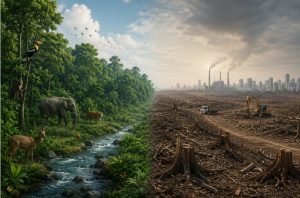
Land is one of the most valuable natural resources on Earth. It supports agriculture, biodiversity, water systems, forests, and human settlements. However, increasing environmental pressure, climate change, deforestation, industrial activities, and unsustainable farming practices are damaging land resources worldwide.
Two commonly discussed environmental problems are desertification and land degradation. Although these terms are often used interchangeably, they are not exactly the same. Both affect soil quality, agricultural productivity, ecosystems, and human livelihoods. Nevertheless, they differ in causes, environmental conditions, and long-term impacts.
Understanding the difference between desertification and land degradation is important for developing effective environmental management and conservation strategies. Governments, researchers, farmers, and environmental organizations are increasingly focusing on restoring damaged land and promoting sustainable land use practices.
Understanding Land Degradation
Land degradation refers to the decline in the quality and productivity of land caused by natural or human activities. It reduces the ability of land to support plants, animals, agriculture, and ecosystems effectively.
Land degradation can occur in:
- Forests
- Agricultural land
- Grasslands
- Wetlands
- Mountain regions
- Urban areas
This environmental problem affects soil fertility, vegetation cover, water retention, and biodiversity.
Land degradation may happen slowly over many years or rapidly due to severe environmental disturbances.
Major Causes of Land Degradation
Several human and natural factors contribute to land degradation.
Deforestation
Cutting trees without proper reforestation exposes soil to erosion and reduces moisture retention. Forest destruction also disrupts ecosystems and biodiversity.
Unsustainable Agriculture
Excessive use of chemical fertilizers, monocropping, over-irrigation, and poor farming methods can weaken soil structure and reduce fertility.
Overgrazing
When livestock graze excessively on grasslands, vegetation cannot recover properly. As a result, soil becomes exposed to erosion.
Soil Erosion
Wind and water erosion remove fertile topsoil, reducing agricultural productivity and damaging ecosystems.
Urbanization and Industrialization
Construction activities, mining, and industrial waste contribute to soil contamination and land destruction.
Climate Change
Rising temperatures, irregular rainfall, droughts, and extreme weather events increase environmental stress on land resources.
Types of Land Degradation
Land degradation appears in different forms depending on environmental conditions and human activities.
Physical Degradation
Physical degradation affects the structure of soil.
Examples include:
- Soil compaction
- Waterlogging
- Crusting
- Reduced water infiltration
These problems reduce the soil’s ability to support healthy plant growth.
Chemical Degradation
Chemical degradation changes soil composition and fertility.
Examples include:
- Salinity
- Soil acidity
- Nutrient depletion
- Pollution contamination
Chemical degradation often results from excessive chemical use or industrial pollution.
Biological Degradation
Biological degradation affects living organisms within the soil ecosystem.
Examples include:
- Loss of soil microorganisms
- Reduced organic matter
- Decline in biodiversity
Healthy soil organisms are essential for nutrient cycling and ecosystem stability.
Environmental Impacts of Land Degradation
Land degradation has serious environmental consequences worldwide.
Loss of Soil Fertility
Degraded land loses essential nutrients required for healthy crop production. Consequently, agricultural productivity declines significantly.
Reduced Biodiversity
Habitat destruction caused by land degradation threatens plants, animals, insects, and microorganisms.
Increased Flood Risk
Healthy soil absorbs rainwater effectively. However, degraded land often increases surface runoff and flooding.
Climate Change Contribution
Damaged ecosystems release stored carbon into the atmosphere. Deforestation and soil degradation also reduce carbon absorption capacity.
Water Scarcity
Land degradation reduces groundwater recharge and water retention, worsening drought conditions.
Economic Effects of Land Degradation
Land degradation affects economies at local, national, and global levels.
Agricultural Losses
Farmers experience lower crop yields due to declining soil fertility and erosion.
Reduced Livelihood Opportunities
Many rural communities depend on healthy land for farming, grazing, and forestry activities.
Rising Food Prices
Reduced agricultural productivity can increase food shortages and market prices.
Infrastructure Damage
Flooding and soil instability caused by degraded land may damage roads, buildings, and irrigation systems.
Social Impacts of Land Degradation
Land degradation also creates social challenges.
Poverty Increase
Declining land productivity reduces income opportunities for farming communities.
Food Insecurity
Reduced agricultural output threatens food availability and nutrition.
Migration and Displacement
Communities affected by severe land degradation may migrate to urban areas or other regions seeking better living conditions.
Conflict Over Resources
Competition for fertile land and water resources can increase social tensions and conflicts.
What Is Desertification?
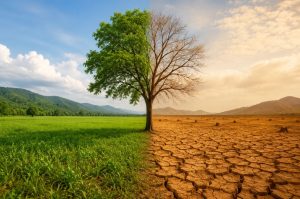
Desertification is a specific type of land degradation that occurs mainly in dryland regions such as arid, semi-arid, and dry sub-humid areas.
It refers to the process where fertile land gradually becomes desert-like due to environmental stress and human activities.
Desertification does not necessarily mean deserts are physically expanding. Instead, productive land loses vegetation, moisture, and fertility until it can no longer support healthy ecosystems or agriculture.
This process is strongly linked to:
- Drought
- Climate change
- Deforestation
- Unsustainable land use
- Overgrazing
Desertification affects millions of people globally, especially in regions heavily dependent on agriculture and livestock.
Causes of Desertification
Several factors contribute to desertification.
Drought and Climate Change
Long periods of drought reduce soil moisture and vegetation growth. Rising temperatures also increase evaporation rates.
Overcultivation
Continuous farming without allowing soil recovery weakens fertility and damages land structure.
Deforestation
Tree removal reduces soil protection and increases exposure to wind erosion.
Overgrazing
Livestock may destroy vegetation cover faster than it can regenerate naturally.
Poor Irrigation Practices
Improper irrigation can cause salinity, making soil unsuitable for farming.
Characteristics of Desertification
Desertification has several visible environmental signs.
Loss of Vegetation
Plants and grasses gradually disappear due to lack of moisture and poor soil quality.
Soil Erosion
Wind erosion becomes more severe in dry regions without vegetation cover.
Reduced Agricultural Productivity
Crop yields decline as soil fertility decreases.
Water Shortages
Groundwater levels often fall in desertified areas.
Increased Dust Storms
Dry and exposed soil can create dust storms that damage ecosystems and human health.
Regions Vulnerable to Desertification
Desertification mainly affects dryland ecosystems.
Highly vulnerable regions include:
- Parts of Africa
- The Middle East
- South Asia
- Northern China
- Australia
- Mediterranean regions
In India, desertification affects several states due to drought, deforestation, mining, and unsustainable agricultural practices.
Difference Between Desertification and Land Degradation
Although related, desertification and land degradation are not identical.
Scope
Land degradation is a broad term covering all forms of declining land quality.
Desertification is a specific type of land degradation occurring mainly in dry regions.
Environmental Conditions
Land degradation can occur in forests, wetlands, mountains, and urban areas.
Desertification mainly affects arid and semi-arid climates.
Main Causes
Land degradation may result from pollution, mining, urbanization, or erosion.
Desertification is strongly connected to drought, climate change, and poor dryland management.
Vegetation Loss
Desertification usually involves severe vegetation loss and desert-like conditions.
Land degradation may or may not create desert conditions.
Geographic Distribution
Land degradation occurs worldwide across many ecosystems.
Desertification mainly affects dryland regions.
Relationship Between Desertification and Climate Change
Climate change plays a major role in worsening desertification.
Rising temperatures increase evaporation and reduce soil moisture. In addition, irregular rainfall patterns weaken vegetation growth.
Extreme weather events such as droughts and heatwaves accelerate land degradation in vulnerable regions.
At the same time, degraded land contributes to climate change by releasing stored carbon and reducing vegetation cover.
Therefore, climate change and desertification create a harmful environmental cycle that affects ecosystems, agriculture, and human populations.
Importance of Healthy Soil
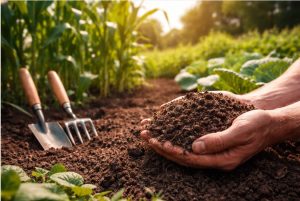
Healthy soil is essential for environmental sustainability and food security.
Healthy land supports:
- Crop production
- Water filtration
- Carbon storage
- Biodiversity
- Climate regulation
Soil also acts as a natural ecosystem that supports microorganisms, insects, and plant growth.
Protecting soil health is one of the most important strategies for preventing both land degradation and desertification.
Sustainable Land Management Practices
Sustainable land management helps reduce environmental damage and improve soil productivity.
Important practices include:
Afforestation and Reforestation
Planting trees helps stabilize soil, improve moisture retention, and reduce erosion.
Sustainable Farming
Crop rotation, organic farming, and conservation agriculture improve soil health.
Controlled Grazing
Proper livestock management prevents overgrazing and vegetation loss.
Water Conservation
Efficient irrigation systems reduce water waste and salinity problems.
Soil Conservation Techniques
Terracing, mulching, and contour farming reduce soil erosion.
Impact on Agriculture and Food Security
Agriculture depends heavily on healthy soil and stable environmental conditions. Therefore, both land degradation and desertification directly threaten global food production.
When soil quality declines, crops struggle to grow properly. Farmers may experience:
- Lower crop yields
- Poor soil fertility
- Reduced water availability
- Increased pest problems
- Nutrient deficiencies
In desertified regions, farming becomes even more difficult because vegetation disappears and water shortages increase. Consequently, communities that depend on agriculture often face severe economic hardship.
Food insecurity becomes more serious when productive farmland continues shrinking. As a result, governments and environmental organizations are focusing more on sustainable farming methods and soil restoration programs.
Effect on Biodiversity
Healthy land supports a wide range of plants, animals, insects, and microorganisms. However, environmental degradation damages habitats and disrupts ecosystems.
Land degradation may reduce biodiversity by:
- Destroying forests
- Polluting soil and water
- Increasing erosion
- Reducing vegetation cover
Similarly, desertification creates harsh environmental conditions that many species cannot survive.
Loss of biodiversity affects ecosystems in several ways:
- Reduced pollination
- Weak food chains
- Lower ecosystem resilience
- Decline in soil fertility
- Reduced natural pest control
Protecting biodiversity is important because ecosystems depend on balanced interactions between living organisms and the environment.
Water Resources and Environmental Stress
Water availability is closely connected to land health. Healthy soil absorbs rainwater, stores moisture, and supports groundwater recharge.
Degraded land often loses this ability. Consequently, water runoff increases while groundwater levels decline.
Desertification further worsens water shortages in dry regions. Reduced vegetation and rising temperatures increase evaporation rates, making drought conditions more severe.
Several water-related problems linked to land degradation include:
- Reduced groundwater recharge
- Increased drought risk
- Water pollution
- River sedimentation
- Lower agricultural irrigation capacity
Efficient water management has become essential for protecting ecosystems and maintaining food production.
Desertification in India
India faces serious challenges related to desertification and land degradation. Several regions experience environmental stress due to rapid population growth, deforestation, mining, industrialization, and unsustainable agriculture.
States highly affected include:
- Rajasthan
- Gujarat
- Maharashtra
- Karnataka
- Telangana
- Andhra Pradesh
Major causes in India include:
- Overgrazing
- Deforestation
- Excessive groundwater extraction
- Soil erosion
- Climate change
- Mining activities
Dry regions are particularly vulnerable because irregular rainfall and high temperatures increase environmental pressure.
The Indian government has introduced several land restoration and afforestation programs to combat desertification and improve sustainable land management.
Global Efforts to Combat Desertification
Many international organizations are working to reduce land degradation and desertification worldwide.
One major initiative is the United Nations Convention to Combat Desertification (UNCCD). This global agreement promotes sustainable land management and environmental restoration.
International efforts focus on:
- Soil conservation
- Sustainable agriculture
- Reforestation
- Water management
- Climate adaptation
- Community participation
Countries worldwide are increasingly recognizing the importance of restoring degraded ecosystems to support climate resilience and food security.
Role of Forests in Preventing Desertification
Forests play a major role in protecting land from degradation and desertification.
Trees help by:
- Stabilizing soil
- Reducing wind erosion
- Improving water retention
- Supporting biodiversity
- Absorbing carbon dioxide
In addition, forests improve local climate conditions and support rainfall cycles.
Deforestation removes these environmental protections. Consequently, exposed land becomes more vulnerable to erosion, drought, and vegetation loss.
Large-scale afforestation and reforestation programs are therefore important strategies for restoring damaged ecosystems.
Soil Conservation Techniques
Soil conservation helps maintain land productivity and environmental stability.
Several techniques are widely used to reduce land degradation.
Contour Farming
Farmers plow along natural land contours to reduce water runoff and erosion.
Terracing
Terraces are created on slopes to slow water flow and protect soil.
Mulching
Organic materials placed over soil help retain moisture and reduce erosion.
Crop Rotation
Growing different crops in sequence improves soil fertility and reduces nutrient depletion.
Conservation Tillage
Reducing excessive plowing helps preserve soil structure and microorganisms.
These methods support sustainable agriculture while protecting long-term soil health.
Importance of Sustainable Agriculture
Sustainable agriculture balances food production with environmental protection.
Unlike harmful farming practices, sustainable methods focus on maintaining soil fertility, conserving water, and protecting ecosystems.
Important sustainable farming approaches include:
- Organic farming
- Agroforestry
- Integrated pest management
- Efficient irrigation systems
- Precision agriculture
These practices reduce environmental damage while supporting long-term agricultural productivity.
Furthermore, sustainable agriculture helps improve resilience against climate change and drought conditions.
Role of Climate Change in Land Degradation
Climate change is increasing environmental stress worldwide. Rising temperatures and changing rainfall patterns directly affect land quality.
Climate-related impacts include:
- Frequent droughts
- Heatwaves
- Flooding
- Soil moisture loss
- Increased erosion
Dry regions are especially vulnerable because even small climate changes can disrupt ecosystems significantly.
Moreover, degraded land contributes to climate change by reducing vegetation cover and releasing stored carbon into the atmosphere.
This creates a cycle where climate change worsens land degradation, and degraded land further accelerates climate problems.
Community Participation in Land Restoration
Local communities play a major role in environmental conservation and land restoration efforts.
Community involvement helps ensure sustainable management of natural resources.
Important community-based approaches include:
- Tree plantation drives
- Water conservation projects
- Sustainable grazing management
- Soil restoration programs
- Environmental education
Farmers and local residents often possess valuable traditional knowledge about land management and ecosystem protection.
When communities actively participate in conservation programs, restoration projects usually become more successful and sustainable.
Economic Importance of Land Restoration
Restoring degraded land provides several economic benefits.
Healthy land improves:
- Agricultural productivity
- Water availability
- Livelihood opportunities
- Ecosystem services
- Tourism potential
In addition, land restoration may reduce disaster-related costs associated with floods, droughts, and soil erosion.
Governments and organizations increasingly view environmental restoration as an investment in long-term economic stability and food security.
Technology and Modern Land Management
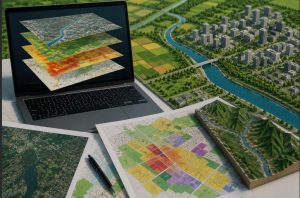
Technology is helping scientists and environmental agencies monitor land degradation more effectively.
Modern tools include:
- Satellite imaging
- Geographic Information Systems (GIS)
- Remote sensing
- Drone monitoring
- Climate modeling
These technologies help identify vulnerable regions and track environmental changes over time.
Scientists can now monitor:
- Vegetation loss
- Soil moisture levels
- Deforestation patterns
- Desert expansion
- Water availability
As a result, governments can develop more accurate environmental management strategies.
Importance of Environmental Awareness
Public awareness is essential for preventing land degradation and desertification.
Many environmental problems are linked to unsustainable human activities such as:
- Excessive deforestation
- Wasteful water use
- Poor farming methods
- Overexploitation of resources
Environmental education encourages individuals and communities to adopt sustainable practices.
Awareness campaigns may promote:
- Tree planting
- Water conservation
- Sustainable farming
- Waste reduction
- Soil protection
Informed communities are more likely to support environmental conservation efforts and responsible land management.
Challenges in Combating Desertification
Although many solutions exist, combating desertification remains difficult in several regions.
Major challenges include:
- Climate change
- Rapid population growth
- Poverty
- Limited financial resources
- Weak environmental policies
- Lack of awareness
In developing countries, economic pressure often forces communities to overuse natural resources for survival.
Therefore, environmental protection strategies must balance ecological sustainability with social and economic needs.
Future Outlook
The future of land conservation depends heavily on sustainable development and climate action.
Experts emphasize the need for:
- Strong environmental policies
- International cooperation
- Sustainable agriculture
- Renewable resource management
- Ecosystem restoration
Emerging technologies and scientific research may improve environmental monitoring and land restoration techniques in the coming years.
At the same time, individuals, businesses, governments, and communities all share responsibility for protecting land resources.
Long-term environmental sustainability requires coordinated global action and responsible land use practices.
Conclusion
Desertification and land degradation are major environmental problems affecting ecosystems, agriculture, biodiversity, water resources, and human livelihoods across the world.
Land degradation refers broadly to the decline in land quality caused by natural and human activities. Desertification, however, is a specific form of degradation that mainly affects dryland regions and creates desert-like conditions.
Both issues are strongly connected to:
- Climate change
- Deforestation
- Soil erosion
- Unsustainable agriculture
- Water mismanagement
- Overgrazing
Without proper environmental protection, these problems may continue threatening food security, economic stability, and ecosystem health.
However, sustainable land management, community participation, technological innovation, and environmental awareness can help restore damaged land and support long-term ecological balance.
Protecting land resources is essential not only for current populations but also for future generations and global environmental sustainability.
FAQs:
Land degradation is the decline in land quality and productivity caused by natural processes or human activities such as deforestation, erosion, and pollution.
Desertification is a type of land degradation that occurs mainly in dry regions where fertile land gradually becomes desert-like.
Land degradation is a broad environmental problem affecting many ecosystems, while desertification specifically affects dryland areas and creates desert conditions.
Major causes include deforestation, overgrazing, soil erosion, mining, urbanization, industrial pollution, and unsustainable farming practices.
Climate change increases droughts, rising temperatures, and irregular rainfall, which reduce soil moisture and vegetation growth.
Healthy soil supports agriculture, biodiversity, water retention, carbon storage, and ecosystem stability.