Desertification is one of the most serious environmental challenges facing the world today. It affects millions of people, reduces agricultural productivity, and threatens ecosystems. However, many people still misunderstand what desertification really means and why it is happening.
In simple terms, desertification is the process by which fertile land becomes dry, degraded, and unproductive. Although it is often associated with deserts, it can happen in many regions, especially in drylands. Therefore, understanding desertification is important for protecting our environment and future.
What Is Desertification?
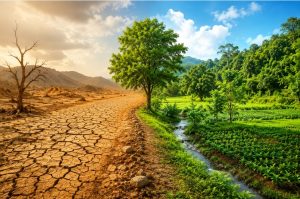
Desertification refers to the gradual degradation of land in dry, semi-arid, and sub-humid regions. Over time, the soil loses its fertility, vegetation disappears, and the land becomes barren.
Importantly, desertification does not mean that deserts are expanding naturally. Instead, it is largely caused by human activities combined with climate changes. As a result, once-productive land turns into desert-like conditions.
Where Does Desertification Occur?
Desertification mainly occurs in dryland regions, which cover a large part of the Earth’s surface. These areas are already sensitive to environmental changes.
For example, regions in Africa, Asia, and parts of India are highly affected. In India, states like Rajasthan, Gujarat, and parts of Maharashtra face increasing land degradation.
Moreover, desertification is not limited to rural areas. It can also affect regions near cities due to overuse of land and poor planning.
Why Is Desertification a Serious Problem?
Desertification is not just an environmental issue. In fact, it has social, economic, and health impacts as well.
First of all, it reduces agricultural productivity. Farmers find it harder to grow crops, which leads to food shortages.
In addition, it affects water availability. As soil quality declines, water retention decreases.
Furthermore, it leads to loss of biodiversity. Plants and animals struggle to survive in degraded land.
As a result, people may be forced to migrate in search of better living conditions.
Therefore, desertification creates a cycle of poverty, environmental damage, and social challenges.
Main Causes of Desertification
Desertification happens due to a combination of natural factors and human activities. However, human actions play a major role.
Climate Change
Climate change is one of the key drivers of desertification. Rising temperatures and changing rainfall patterns affect soil and vegetation.
For instance, prolonged droughts reduce soil moisture. As a result, plants die, and the land becomes dry and barren.
In addition, extreme weather events like heatwaves worsen the situation. Therefore, climate change accelerates land degradation.
Deforestation
Trees play a vital role in maintaining soil health. They prevent soil erosion and help retain moisture.
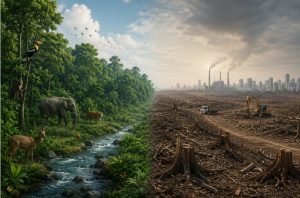
However, large-scale cutting of forests removes this protection. As a result, the soil becomes loose and easily eroded by wind and water.
Moreover, deforestation reduces rainfall in some areas. Therefore, it directly contributes to desertification.
Overgrazing
Overgrazing occurs when too many animals feed on the same land. This removes vegetation faster than it can regrow.
As a result, the soil becomes exposed and vulnerable. Wind and rain can easily carry away the topsoil.
Therefore, overgrazing is a major cause of land degradation in many regions.
Poor Agricultural Practices
Unsustainable farming methods can damage the soil over time.
For example, excessive use of chemical fertilizers can reduce soil fertility.
In addition, over-irrigation can lead to salinization, making the soil unsuitable for crops.
Moreover, not rotating crops weakens soil nutrients.
Therefore, poor farming practices contribute significantly to desertification.
Water Mismanagement
Water is essential for maintaining fertile land. However, improper use of water resources can harm the environment.
For instance, excessive groundwater extraction lowers water levels.
At the same time, inefficient irrigation methods waste water.
As a result, the land becomes dry and less productive.
Urbanization and Land Overuse
Rapid urban growth puts pressure on land resources.
For example, construction activities remove vegetation and disturb soil structure.
In addition, industrial activities may pollute the land.
Therefore, urbanization also plays a role in land degradation.
The Role of Soil in Desertification
Soil is the foundation of life on land. However, it is highly sensitive to environmental changes.
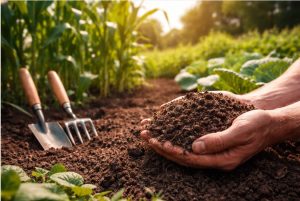
Healthy soil contains nutrients, organic matter, and microorganisms. These elements support plant growth.
However, when soil is overused or exposed, it loses these essential components. As a result, it becomes dry and infertile.
Therefore, protecting soil is key to preventing desertification.
Early Signs of Desertification
Recognizing early signs can help prevent further damage.
One common sign is reduced crop yield. Farmers may notice that crops are not growing as well as before.
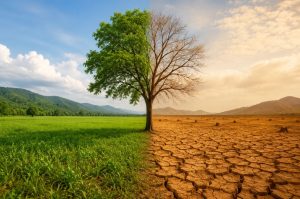
In addition, the soil may appear dry, cracked, or loose.
Vegetation may also decrease over time.
Dust storms can become more frequent in affected areas.
Therefore, early detection is important for taking corrective action.
Global Impact of Desertification
Desertification affects millions of people worldwide.
It threatens food security by reducing the amount of arable land.
In addition, it contributes to climate change by releasing carbon stored in soil.
Furthermore, it increases poverty in affected regions.
As a result, desertification has both local and global consequences.
Effects of Desertification
Desertification affects not only land but also people, wildlife, and the economy. Therefore, its impact is wide and long-lasting.
Loss of Agricultural Productivity
First of all, desertification reduces the ability of land to grow crops.
As soil loses nutrients and moisture, crop yields decrease. As a result, farmers struggle to maintain their livelihoods.
This can lead to food shortages and higher food prices.
Water Scarcity
As land degrades, it loses its ability to retain water.
Therefore, groundwater levels drop, and surface water becomes scarce.
In addition, drought conditions become more frequent.
As a result, both agriculture and daily life are affected.
Loss of Biodiversity
Plants and animals depend on healthy ecosystems. However, desertification destroys these habitats.
As vegetation disappears, animals lose food and shelter.
Therefore, many species either migrate or face extinction.
Increased Poverty and Migration
When land becomes unproductive, people lose their source of income.
As a result, many are forced to migrate to cities or other regions.
This creates pressure on urban areas and can lead to social challenges.
Contribution to Climate Change
Healthy soil stores carbon. However, when land degrades, this carbon is released into the atmosphere.
As a result, greenhouse gas levels increase.
Therefore, desertification and climate change are closely connected.
How Can Desertification Be Prevented?
Although desertification is a serious issue, it can be controlled with proper planning and action. In fact, many solutions are simple and sustainable.
Afforestation and Reforestation
Planting trees is one of the most effective solutions.
Trees help hold the soil together and prevent erosion. In addition, they improve moisture levels and support rainfall.
Therefore, increasing green cover can restore degraded land.
Sustainable Farming Practices
Farmers can adopt better methods to protect soil health.
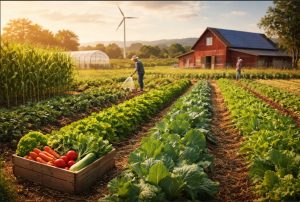
For example, crop rotation helps maintain soil nutrients.
In addition, using organic fertilizers improves soil quality.
Moreover, conservation tillage reduces soil disturbance.
As a result, land remains productive for a longer time.
Controlled Grazing
Managing livestock properly can prevent overgrazing.
For instance, rotating grazing areas allows vegetation to regrow.
Therefore, the land remains protected and balanced.
Water Management
Efficient use of water is essential.
Drip irrigation and rainwater harvesting can help conserve water.
In addition, reducing water wastage improves long-term availability.
Therefore, better water management supports land health.
Soil Conservation Techniques
Protecting soil is key to preventing desertification.
Methods like mulching help retain moisture.
Terracing can reduce soil erosion in hilly areas.
Windbreaks, such as planting trees in rows, can reduce wind erosion.
As a result, soil remains stable and fertile.
Role of Governments and Global Organizations
Governments and international organizations play a major role in fighting desertification.
One important global effort is led by United Nations Convention to Combat Desertification. This initiative focuses on sustainable land management and restoring degraded land.
In India, programs like watershed management and afforestation projects are being implemented.
In addition, policies are being developed to promote sustainable agriculture and water use.
Therefore, combined efforts at local, national, and global levels are essential.
Community Role in Preventing Desertification
Local communities play a crucial role in protecting land.
Farmers can adopt eco-friendly farming practices.
Communities can participate in tree plantation drives.
In addition, spreading awareness about land conservation is important.
Therefore, collective action can make a significant difference.
Practical Steps Individuals Can Take
Even individuals can contribute to reducing desertification.
You can start by saving water in daily life.
In addition, supporting sustainable products and farming helps reduce environmental damage.
Planting trees in your surroundings also supports land health.
Moreover, spreading awareness about environmental issues can inspire others.
As a result, small actions can create a big impact over time.
Success Stories Around the World
There are many examples where desertification has been controlled successfully.
For instance, large-scale tree planting projects in Africa have helped restore degraded land.
In India, watershed management programs have improved water availability and soil quality in rural areas.
Therefore, with the right approach, land can recover and become productive again.
Future Challenges and Opportunities
While progress has been made, challenges still remain.
Climate change continues to increase the risk of desertification.
Population growth also puts pressure on land resources.
However, new technologies and sustainable practices offer hope.
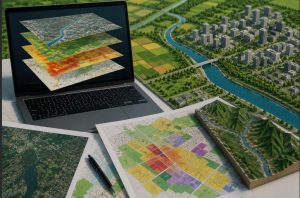
For example, modern irrigation systems and soil monitoring tools can improve land management.
Therefore, the future depends on how well we balance development and sustainability.
Final Thoughts
Desertification is a serious global issue, but it is not irreversible.
With the right combination of awareness, sustainable practices, and policy support, land can be protected and restored.
In conclusion, every effort—whether by governments, communities, or individuals—matters in the fight against desertification.
By working together, we can ensure a healthier environment and a more secure future for the next generations.
FAQs:
Desertification is the process where fertile land becomes dry and unproductive. It happens when soil loses nutrients and vegetation disappears. As a result, the land starts looking like a desert.
Desertification is caused by both natural and human factors. For example, climate change, deforestation, overgrazing, and poor farming practices all contribute to land degradation.
Desertification reduces food production and water availability. In addition, it harms wildlife and increases poverty. Therefore, it affects both the environment and human life.
Dry and semi-arid regions are most affected. For instance, parts of Africa, Asia, and India face high levels of land degradation.
Farmers face reduced crop yields due to poor soil quality. As a result, their income decreases, and they may struggle to survive.
Climate change increases temperatures and reduces rainfall. Therefore, it makes land drier and speeds up the process of desertification.