
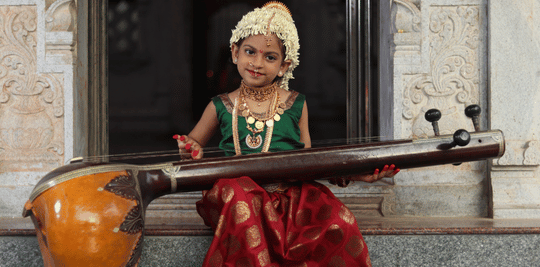
Indian classical music types have shaped the sound of the subcontinent for hundreds of years. These traditions were not created overnight. They grew slowly, carried by saints, scholars, travelers, royal courts, and communities who lived by music. Today, when someone speaks about Indian classical music types, they usually mean two major traditions: Hindustani and Carnatic music. Both are powerful, both are profound, and both reflect the diverse cultural roots of India.
While they share the same ancient foundation, they flourished in different regions and developed their own identity. This blog explores these two forms, their history, their styles, their instruments, and what makes each one special. You will travel through time, listen to stories behind ragas, feel the rhythm of talas, and understand why these musical systems remain alive even today.

The Roots of Indian Classical Music Types
To understand the difference between the two major indian classical music types, it helps to look at their early beginnings. The foundation of both traditions can be traced back to the Vedic period, when hymns called Sama Veda were sung as chants. These chants were more than just songs; they were spiritual practices.
As time passed, these chants inspired the development of ragas, talas, and basic musical principles. Over centuries, musical scholars wrote detailed treatises describing notes, moods, scales, and performance rules. Some of these ideas became common to both traditions, while others shaped the distinct styles we know today.
In simple terms, both Hindustani and Carnatic music share a strong classical base. But the influence of kingdoms, philosophies, and cultural interactions slowly pushed them in different directions. That is why you see two unique indian classical music types instead of one unified system.
How Hindustani and Carnatic Music Grew Apart
Hindustani music developed mainly in North India, while Carnatic music grew in the South. Around the 12th century, shifting political and cultural landscapes separated musical traditions across regions. North India experienced interaction with Persian, Afghan, and Central Asian cultures, which shaped its style. South India, more sheltered from these influences, continued with its traditional path.
This difference in environment gave rise to two distinct indian classical music types. Hindustani music became more open to improvisation, slow movements, and expressive exploration. Carnatic music focused heavily on structured compositions, devotional themes, and intricate rhythmic patterns.
Hindustani Classical Music: Origin and Essence
Hindustani classical music is one of the primary indian classical music types performed across North India. It emphasizes improvisation, expression, and a deep connection with mood. The musician often takes time to unfold a raga, moving step by step, like telling a story slowly.
Key Features of Hindustani Music
- Elaborate Raga Development
Performances usually begin with an alap, a slow, free-flowing introduction. This is where the musician explores the notes without rhythm. Later sections add tempo, rhythm, and improvisation. - Use of Ornamentation
Hindustani music uses slides, glides, and subtle transitions between notes. These delicate movements give the music its emotional depth. - Influence of Gharanas
A gharana is a musical lineage or school of thought. Over time, different gharanas formed, each with its own style of teaching and performance. These gharanas helped shape the identity of this indian classical music type. - Connection with Poetry
Many compositions in Hindustani music use romantic or spiritual poetry. This brings emotion and storytelling into performances.
Popular Instruments in Hindustani Music
- Sitar – known for its bright, ringing sound
- Sarod – deeper and more intense
- Tabla – rhythmic heart of North Indian music
- Bansuri – bamboo flute with a soothing tone
- Harmonium – used for melodic support
These instruments shaped the soundscape of this northern branch of indian classical music types.

Carnatic Classical Music: Origin and Essence
Carnatic music is the second major branch among indian classical music types. It is practiced mainly in Tamil Nadu, Karnataka, Andhra Pradesh, and Kerala. Unlike Hindustani music, it focuses more on structured compositions rather than long improvisations. The emphasis is strongly devotional.
Key Features of Carnatic Music
- Rich Compositional Tradition
Most performances revolve around compositions created by legendary saints and scholars. These compositions have layers of melody, meaning, and rhythmic patterns. - Strong Rhythmic Complexity
Carnatic music is known for its advanced rhythms. Artists experiment with patterns, syllables, and tempo changes in exciting ways. - Clear Structure in Concerts
A Carnatic concert follows a predictable flow. It usually begins with a light piece, then gradually moves to complex ones. - Devotional Foundation
Lyrics often praise gods and goddesses. The emotional focus is devotion, making it a deeply spiritual musical tradition.
Popular Instruments in Carnatic Music
- Veena – ancient string instrument with a warm tone
- Violin – played differently from Western style
- Mridangam – main percussion instrument
- Ghatam – clay pot used for rhythm
- Kanjira – small frame drum
These instruments define the southern branch of indian classical music types.
Ragas: The Soul of Both Traditions
In all indian classical music types, ragas are the foundation. A raga is not just a scale. It is a mood, a color, a personality. Each raga has a specific set of notes, rules, and emotional expressions.
But Hindustani and Carnatic music handle ragas differently.
Ragas in Hindustani Music
- Expand slowly
- Use long improvisations
- Focus on emotional expression
- Often paired with specific times of day
Ragas in Carnatic Music
- Strict structure
- Faster exploration compared to Hindustani
- Usually tied to devotional themes
- More ragas in total compared to the northern system
Both traditions treat ragas with respect, but their approaches reflect the uniqueness of these indian classical music types.

Tala: Rhythm That Moves the Music
The rhythmic system in Indian classical music is called tala. Both traditions use talas, but in different ways.
Tala in Hindustani Music
- Simpler patterns
- Fewer hand gestures
- Common talas: Teentaal, Ektaal, Jhaptal
- Tabla players add improvisational phrases
Tala in Carnatic Music
- Highly complex
- Many subdivisions and variations
- Common talas: Adi Tala, Rupaka Tala, Misra Chapu
- Mridangam players use advanced rhythmic syllables
This rhythmic diversity adds color to the world of indian classical music types.
The Role of Improvisation
Improvisation is central to all indian classical music types, but the balance differs.
Improvisation in Hindustani Music
Hindustani performances often revolve around improvisation. An artist may spend several minutes or even hours exploring a single raga. This creates a meditative, slow-building experience.
Improvisation in Carnatic Music
Carnatic music also has improvisation, but it follows a structured format. Each improvisational section is placed at a specific point in the concert. The goal is not only creativity but also precision.
Both styles show how flexible and expressive indian classical music types can be.
Compositions: The Heart of the Music
While Hindustani music values improvisation, it still has set compositions. Carnatic music, however, places much greater emphasis on them.
Hindustani Compositions
- Called bandish or khayal
- Simple lyrics
- Serve as a base for improvisation
Carnatic Compositions
- Called kriti, varnam, tillana, and more
- Rich lyrical meaning
- Strong devotional message
- Serve as the central piece of a concert
This difference gives each tradition a unique identity within the universe of indian classical music types.
Performance Style and Experience
A listener can often distinguish between the two indian classical music types just by listening.
Hindustani Performance Style
- Slow, spacious, meditative
- Voice or instrument takes center stage
- Gentle unfolding of melody
Carnatic Performance Style
- Energetic, direct, fast-paced
- Teamwork between vocalist and percussion
- Rich interplay of rhythm and melody
Even without musical training, the contrast is clear.

The Influence of Regional Culture
The two indian classical music types reflect the cultures that gave birth to them.
North Indian Influence
- Persian and Mughal elements
- Love for improvisation
- Focus on emotional depth
South Indian Influence
- Strong temple culture
- Devotional compositions
- Advanced rhythmic structures
These influences shaped not only the music but also the atmosphere of concerts and teaching methods.
Learning Indian Classical Music
Becoming a musician in either tradition takes years of practice. The traditional method is called guru-shishya parampara, where a student learns directly from a teacher over a long period. This personal guidance preserves the purity of indian classical music types.
Students learn:
- Basic notes
- Ragas
- Talas
- Voice training or instrument technique
- Improvisation
- Compositions
- Performance discipline
Whether learning Hindustani or Carnatic music, the journey is long but rewarding.
Why These Traditions Still Matter Today
In a world of fast music and digital entertainment, indian classical music types still hold a strong place. They give listeners peace, depth, and a connection with heritage. Musicians around the globe study these traditions, blending them with Western music, jazz, and contemporary genres.
Concerts, festivals, and online performances show that people still crave these timeless sounds. The beauty of Hindustani and Carnatic music lies in their ability to stay rooted while still evolving.
Keynote Takeaway
Indian classical music types are more than artistic traditions. They are living histories shaped by devotion, culture, and human emotion. Hindustani and Carnatic music grew from the same ancient roots, yet they blossomed into two distinct musical worlds. Each has its own charm, structure, instruments, and performance style.
Understanding these differences not only helps you appreciate the music more deeply but also brings you closer to India’s cultural soul.
FAQs:
1. What are the two major traditions of Indian classical music?
The two major traditions are Hindustani classical music from North India and Carnatic classical music from South India. Both come from the same ancient roots but developed in different ways over time.
2. How is Hindustani music different from Carnatic music?
Hindustani music focuses more on slow development, emotional expression, and long improvisations. Carnatic music is more structured, fast-paced, and heavily based on devotional compositions and complex rhythms.
3. Which instruments are common in Hindustani music?
Popular instruments include the sitar, tabla, sarod, bansuri, and harmonium. Each adds its own tone and helps shape the sound of North Indian classical music.
4. Which instruments are used in Carnatic music?
Carnatic performances often include the veena, violin, mridangam, ghatam, and kanjira. These instruments bring a bright and rhythmic character to the music.
5. What is a raga?
A raga is a melodic framework with rules for how notes should be used. It creates a specific mood or feeling. Both Hindustani and Carnatic systems use ragas, though they explore them differently.
6. Is it hard to learn Indian classical music?
It takes patience and regular practice, but anyone can learn with a good teacher. Most students start with basic notes, small patterns, and simple compositions before moving to advanced techniques.
7. Are both styles still popular today?
Yes. Concerts, festivals, online classes, and digital performances keep both traditions alive. Many young musicians are exploring these art forms and even blending them with modern music.
8. Can someone enjoy the music even without training?
Absolutely. The beauty of both Hindustani and Carnatic music is that they connect with the listener emotionally, even if the person has no musical background.


