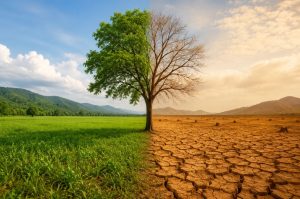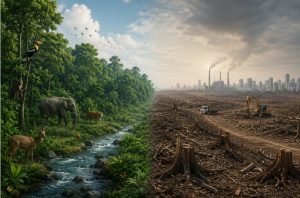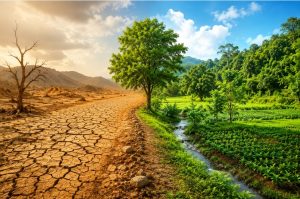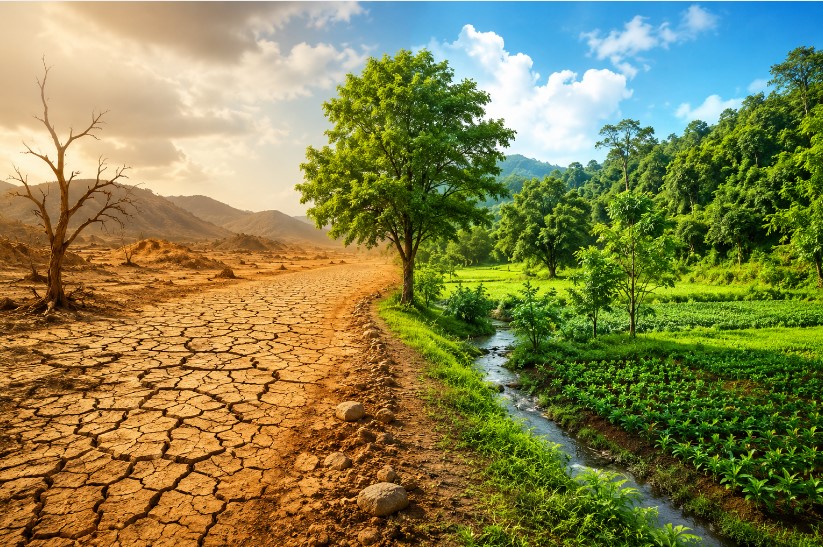
Land degradation is becoming one of the biggest environmental challenges in India. Rapid urbanization, deforestation, industrial growth, climate change, overgrazing, mining, and unsustainable farming practices are damaging soil quality and reducing land productivity across many regions of the country.
Healthy land is essential for food security, biodiversity, water conservation, rural livelihoods, and economic growth. However, increasing pressure on natural resources has accelerated soil erosion, desertification, nutrient depletion, salinity, and loss of vegetation cover.
As India continues developing economically and industrially, the need for effective land degradation management is becoming more urgent. Sustainable land restoration and conservation strategies are now critical for environmental protection and long-term agricultural productivity.
What Is Land Degradation?
Land degradation refers to the decline in the quality and productivity of land caused by natural or human activities. It reduces the ability of land to support crops, forests, biodiversity, and ecological balance.
Land degradation can affect:
- Soil fertility
- Water retention
- Vegetation growth
- Agricultural productivity
- Ecosystem stability
In severe cases, degraded land may become unfit for cultivation or habitation.
Why Land Degradation Is a Major Concern in India
India has a large and rapidly growing population that depends heavily on land resources for agriculture, housing, industries, and infrastructure development.
At the same time, limited land availability increases pressure on natural ecosystems.
Several factors make land degradation a serious issue in India.
High Dependence on Agriculture
A significant portion of India’s population depends on agriculture for livelihood. Therefore, declining soil quality directly affects food production and farmer incomes.
Rapid Urban Expansion
Cities are expanding rapidly across India. As a result, fertile agricultural land is often converted into residential, commercial, and industrial areas.
Climate Change Impact
Climate change increases droughts, floods, heatwaves, and irregular rainfall patterns. Consequently, land becomes more vulnerable to erosion and degradation.
Increasing Water Stress
Overuse of groundwater and poor irrigation practices contribute to soil salinity and declining land productivity.
Loss of Forest Cover
Deforestation reduces vegetation that protects soil from erosion and supports ecological balance.
Types of Land Degradation in India
Land degradation occurs in several forms across different regions of India.
Soil Erosion
Soil erosion is one of the most common forms of degradation.
Wind and water remove the fertile topsoil layer, reducing soil productivity.
Causes of Soil Erosion
Major causes include:
- Deforestation
- Overgrazing
- Heavy rainfall
- Unsustainable farming
- Construction activities
Effects of Soil Erosion
Soil erosion may lead to:
- Reduced crop yields
- Loss of nutrients
- Water pollution
- Flood risks
Desertification
Desertification refers to the transformation of fertile land into dry and barren areas.
This problem is severe in arid and semi-arid regions.
Desertification-Prone Areas in India
States facing desertification challenges include:
- Rajasthan
- Gujarat
- Haryana
- Maharashtra
- Karnataka
Causes of Desertification
Factors include:
- Water scarcity
- Deforestation
- Overcultivation
- Climate change
- Poor land management
Soil Salinity
Soil salinity occurs when excessive salts accumulate in the soil.
This problem commonly affects irrigated agricultural land.
Causes of Salinity
Main causes include:
- Poor drainage
- Excessive irrigation
- Seawater intrusion
- Improper water management
Impact on Agriculture
Saline soils reduce crop growth and lower agricultural productivity.
Waterlogging
Waterlogging occurs when excess water saturates the soil.
As a result, oxygen supply to plant roots decreases.
Causes of Waterlogging
Common causes include:
- Poor drainage systems
- Excess irrigation
- Flooding
- Canal seepage
Mining-Induced Degradation
Mining activities significantly damage land quality.
Open-pit mining removes vegetation and disturbs soil structure.
Environmental Effects of Mining
Mining may cause:
- Soil contamination
- Habitat destruction
- Water pollution
- Deforestation
Industrial Land Pollution
Industrial waste and chemicals can contaminate land and reduce soil fertility.
Improper disposal of hazardous waste increases environmental risks.
Major Causes of Land Degradation in India
Land degradation results from a combination of human activities and environmental factors.
Unsustainable Agricultural Practices
Excessive use of chemical fertilizers and pesticides damages soil health over time.
Monocropping
Growing the same crop repeatedly reduces soil nutrients and biodiversity.
Overcultivation
Continuous farming without proper soil recovery weakens land productivity.
Improper Irrigation
Excessive irrigation increases salinity and waterlogging problems.
Deforestation
Forests protect soil from erosion and help maintain ecological balance.
However, large-scale tree cutting for agriculture, urbanization, and industries increases degradation risks.
Overgrazing
Excessive grazing by livestock removes vegetation cover and weakens soil stability.
As a result, land becomes vulnerable to erosion.
Urbanization and Infrastructure Development
Road construction, industrial projects, and urban expansion often destroy fertile land and natural ecosystems.
Climate Change
Climate change worsens land degradation through:
- Droughts
- Floods
- Heat stress
- Irregular rainfall
- Extreme weather events
Population Growth
Rising population increases demand for:
- Food production
- Housing
- Water
- Energy
- Infrastructure
Consequently, pressure on land resources continues growing.
Current Status of Land Degradation in India
India faces significant land degradation challenges across multiple regions.
According to various environmental reports, a large percentage of India’s land area is affected by degradation or desertification.
Regions Most Affected
Different regions experience different forms of degradation.
Arid and Semi-Arid Regions
These areas mainly face desertification and water scarcity.
Himalayan Regions
Mountain regions experience severe soil erosion and landslides.
Coastal Areas
Coastal land often suffers from salinity and erosion.
Industrial Belts
Industrial zones face chemical contamination and pollution-related degradation.
Economic Impact of Land Degradation
Land degradation affects India’s economy significantly.
Reduced Agricultural Productivity
Declining soil fertility lowers crop production and farmer incomes.
Increased Poverty in Rural Areas
Many rural communities depend directly on healthy land resources for survival.
Therefore, degraded land increases economic vulnerability.
Rising Food Security Concerns
As productive land decreases, food security risks may increase.
Higher Environmental Management Costs
Governments must invest more in:
- Soil restoration
- Water conservation
- Afforestation
- Disaster management
Environmental Impact of Land Degradation
Land degradation damages ecosystems and biodiversity.
Loss of Biodiversity
Degraded ecosystems cannot support healthy plant and animal populations.
Water Resource Decline
Poor soil quality reduces groundwater recharge and water retention.
Increased Flood and Drought Risks
Degraded land cannot absorb water efficiently.
Consequently, flood and drought risks increase.
Climate Change Acceleration
Healthy ecosystems store carbon naturally.
However, degraded land releases more greenhouse gases into the atmosphere.
Importance of Land Degradation Management
Managing land degradation is essential for sustainable development in India.
Protecting Food Security
Healthy soil is necessary for stable agricultural production.
Supporting Rural Livelihoods
Millions of people depend on agriculture, forests, and natural resources for income.
Conserving Biodiversity
Land restoration helps protect ecosystems and wildlife habitats.
Improving Climate Resilience
Healthy land improves resistance against climate-related disasters.
Sustainable Economic Growth
Long-term economic development depends on environmental sustainability.
Government Initiatives for Land Restoration
India has launched several programs to address land degradation.
National Action Programme to Combat Desertification
This program focuses on sustainable land management and drought mitigation.
Soil Health Card Scheme
The scheme helps farmers understand soil nutrient conditions and improve fertilizer use.
National Afforestation Programme
This initiative supports forest restoration and tree plantation activities.
Watershed Development Projects
Watershed programs improve water conservation and soil protection in rural areas.
MGNREGA and Land Development
The rural employment scheme also supports land restoration activities such as:
- Pond construction
- Soil conservation
- Afforestation
- Water harvesting
Role of Sustainable Agriculture in Land Management
Sustainable farming practices are critical for preventing land degradation.
Organic Farming
Organic farming reduces chemical dependence and improves soil health naturally.
Crop Rotation
Rotating crops helps restore nutrients and improve biodiversity.
Conservation Agriculture
Conservation farming reduces soil disturbance and improves moisture retention.
Agroforestry
Combining trees with agriculture improves soil stability and environmental sustainability.
Rainwater Harvesting
Water conservation practices reduce irrigation pressure and improve soil conditions.
Role of Technology in Land Degradation Management
Technology is becoming increasingly important in environmental management.
Remote Sensing and Satellite Monitoring
Satellite technology helps monitor land degradation patterns across large areas.
Geographic Information Systems
GIS technology supports land-use planning and environmental assessment.
Artificial Intelligence in Agriculture
AI tools help optimize irrigation, fertilizer use, and soil monitoring.
Drones for Land Assessment
Drones provide high-resolution land mapping and crop analysis.
Importance of Community Participation
Local communities play a major role in successful land restoration projects.
Traditional Knowledge Systems
Many rural communities use traditional conservation methods that support sustainable land management.
Community Forestry Programs
Local participation improves forest protection and restoration efforts.
Farmer Awareness Programs
Education and training help farmers adopt sustainable agricultural practices.
Challenges in Land Degradation Management
Despite various efforts, India still faces several challenges in controlling land degradation.
Lack of Awareness
Many people remain unaware of sustainable land practices.
Financial Limitations
Land restoration projects often require large investments.
Weak Policy Implementation
Some environmental policies face implementation challenges at local levels.
Climate Uncertainty
Climate change makes long-term land management more difficult.
Population Pressure
Growing resource demand continues increasing pressure on land ecosystems.
Future Strategies for Land Degradation Management in India
India is entering a critical phase in environmental management. As population growth, climate change, industrialization, and urban expansion continue increasing pressure on natural resources, the country must adopt stronger and smarter land restoration strategies.
Future land degradation management will require a combination of:
- Sustainable agriculture
- Advanced technology
- Climate adaptation
- Policy reforms
- Community participation
- Scientific research
Therefore, long-term planning is essential for protecting India’s land resources and environmental stability.
Climate-Smart Agriculture for Sustainable Land Use
Climate-smart agriculture is expected to become one of the most important solutions for future land management in India.
This approach focuses on increasing productivity while protecting natural ecosystems.
What Is Climate-Smart Agriculture?
Climate-smart agriculture promotes farming methods that:
- Reduce environmental damage
- Improve soil health
- Increase water efficiency
- Adapt to climate change
- Lower greenhouse gas emissions
As a result, farmers can maintain productivity while conserving land resources.
Precision Farming Technologies
Precision farming uses digital tools and data analysis to improve agricultural efficiency.
Technologies Used in Precision Farming
Future agriculture may increasingly use:
- GPS systems
- Soil sensors
- AI-based monitoring
- Smart irrigation systems
- Satellite imaging
- Drones
These technologies help farmers use water, fertilizers, and pesticides more efficiently.
Benefits of Precision Farming
Precision agriculture may help:
- Reduce soil degradation
- Improve crop yields
- Lower water waste
- Minimize chemical pollution
- Increase soil productivity
Therefore, technology-driven farming may become a major part of India’s land restoration future.
Organic and Natural Farming Expansion
Organic farming is gaining attention as a sustainable alternative to chemical-intensive agriculture.
Importance of Organic Farming
Organic agriculture improves:
- Soil biodiversity
- Nutrient balance
- Water retention
- Microbial activity
In addition, it reduces chemical contamination in soil and water.
Natural Farming Initiatives in India
Several Indian states are encouraging natural farming practices that reduce synthetic fertilizer use.
As awareness grows, future agricultural policies may support wider adoption of eco-friendly farming systems.
Agroforestry as a Future Solution
Agroforestry combines agriculture with tree plantation.
This method is becoming increasingly important for land restoration.
Benefits of Agroforestry
Agroforestry supports:
- Soil conservation
- Carbon storage
- Biodiversity protection
- Water retention
- Farmer income diversification
Trees also reduce soil erosion caused by wind and heavy rainfall.
Agroforestry and Climate Resilience
Mixed farming systems improve resilience against droughts and climate uncertainty.
Therefore, agroforestry may become a key part of India’s sustainable land management strategy.
Reforestation and Afforestation Programs
Tree plantation and forest restoration are essential for preventing land degradation.
Importance of Forest Ecosystems
Forests protect land by:
- Stabilizing soil
- Conserving moisture
- Preventing erosion
- Supporting biodiversity
- Regulating climate
As a result, forest restoration improves ecological balance.
Future Afforestation Goals
India is expected to continue expanding:
- Urban forests
- Community forests
- Riverbank plantations
- Coastal green belts
- Degraded land plantations
Large-scale plantation drives may support carbon reduction and land recovery goals.
Water Conservation and Land Restoration
Water scarcity and poor irrigation management contribute heavily to land degradation.
Therefore, future land management strategies must improve water conservation.
Rainwater Harvesting Expansion
Rainwater harvesting can improve groundwater recharge and reduce water stress.
Future policies may encourage:
- Rooftop harvesting
- Farm ponds
- Recharge wells
- Community water storage systems
Micro-Irrigation Systems
Drip irrigation and sprinkler systems reduce excessive water use.
These systems help prevent:
- Waterlogging
- Salinity
- Soil erosion
Consequently, efficient irrigation supports healthier land conditions.
Watershed Management Approaches
Watershed development programs improve land and water conservation simultaneously.
Benefits of Watershed Projects
Watershed management helps:
- Control soil erosion
- Improve groundwater recharge
- Increase vegetation cover
- Enhance agricultural productivity
Community participation is especially important in watershed development success.
Role of Renewable Energy in Land Protection
Renewable energy may reduce environmental pressure caused by conventional energy systems.
Solar Energy and Sustainable Land Use
Solar power reduces dependence on fossil fuels and large-scale mining activities.
Future expansion of:
- Solar parks
- Rooftop solar systems
- Solar irrigation pumps
may support sustainable development goals.
Bioenergy and Agricultural Waste Management
Agricultural waste can be converted into bioenergy instead of being burned openly.
This reduces:
- Air pollution
- Soil damage
- Carbon emissions
As a result, cleaner energy systems may support land conservation efforts.
Smart Land Monitoring Technologies
Technology will play a major role in future land degradation management.
Satellite Monitoring Systems
Satellite imaging helps monitor:
- Deforestation
- Soil moisture
- Vegetation cover
- Desertification
- Crop health
Real-time monitoring improves environmental decision-making.
Geographic Information Systems
GIS technology supports land-use planning and environmental mapping.
Governments can use GIS to identify vulnerable areas and prioritize restoration projects.
Artificial Intelligence in Environmental Management
AI systems may improve:
- Soil prediction models
- Water management
- Crop planning
- Climate risk analysis
Therefore, AI-driven environmental management may become increasingly common.
Drones for Land Assessment
Drones provide detailed aerial surveys of degraded regions.
They can help monitor:
- Forest restoration
- Soil erosion
- Crop conditions
- Water resources
Drones also reduce monitoring costs and improve efficiency.
Sustainable Urban Planning and Land Conservation
Urban expansion is a major cause of land degradation in India.
Future cities must become more environmentally sustainable.
Green Infrastructure Development
Sustainable urban planning may include:
- Urban forests
- Green roofs
- Rain gardens
- Permeable pavements
- Protected wetlands
These features improve environmental resilience.
Controlling Urban Sprawl
Unplanned urban growth destroys fertile agricultural land.
Therefore, future policies may focus on:
- Compact city development
- Smart zoning systems
- Land-use regulations
Waste Management Improvements
Improper waste disposal damages soil quality and increases pollution.
Scientific Waste Processing
Future waste management systems may emphasize:
- Recycling
- Composting
- Waste segregation
- Waste-to-energy projects
Better waste management reduces environmental contamination.
Plastic Pollution Control
Plastic waste damages ecosystems and soil health.
Future policies may encourage:
- Biodegradable materials
- Plastic recycling
- Reduced single-use plastics
Role of Education and Public Awareness
Public participation is essential for successful land restoration.
Environmental Education
Schools and universities may increasingly include environmental sustainability in their curricula.
As awareness improves, future generations may adopt more sustainable lifestyles.
Farmer Training Programs
Farmers need practical training in:
- Soil conservation
- Organic farming
- Water management
- Sustainable irrigation
Education improves adoption of eco-friendly practices.
Community Participation in Land Restoration
Local communities are central to long-term land management success.
Importance of Local Involvement
Communities understand local environmental conditions better than external agencies.
Therefore, involving local populations improves restoration effectiveness.
Women’s Role in Sustainable Land Management
Women play major roles in:
- Agriculture
- Water conservation
- Forest management
- Rural sustainability
Future programs may increase women’s participation in environmental leadership.
Government Policy Reforms for Future Sustainability
Strong policy frameworks are necessary for long-term land conservation.
Strengthening Environmental Regulations
Future reforms may focus on:
- Sustainable mining rules
- Pollution control
- Land restoration requirements
- Forest protection laws
Better enforcement is equally important.
Incentives for Sustainable Practices
Governments may provide financial support for:
- Organic farming
- Water conservation
- Agroforestry
- Renewable energy adoption
Economic incentives encourage sustainable behavior.
Public-Private Partnerships
Private companies may increasingly participate in environmental restoration projects through corporate sustainability initiatives.
India’s International Environmental Commitments
India is involved in several global environmental agreements.
Land Degradation Neutrality Goals
India aims to restore degraded land and improve environmental sustainability under international commitments.
Climate Action and Sustainability
Land restoration also supports:
- Carbon reduction
- Climate adaptation
- Biodiversity conservation
Therefore, environmental management is linked closely with climate policy.
Challenges in Future Land Management
Despite progress, several obstacles remain.
Financial Constraints
Large-scale land restoration projects require significant investment.
Climate Change Uncertainty
Extreme weather events may continue damaging ecosystems.
Population Pressure
Rising demand for food, housing, and infrastructure increases land-use pressure.
Technology Access Gaps
Advanced environmental technologies may not be easily accessible in all rural regions.
Coordination Challenges
Land management requires cooperation between:
- Governments
- Farmers
- Scientists
- Industries
- Local communities
Coordination remains a major challenge.
Opportunities for a Sustainable Future
Although challenges exist, India also has strong opportunities for improvement.
Growing Environmental Awareness
More people now recognize the importance of sustainability and conservation.
Rapid Technological Development
Environmental monitoring technologies are improving quickly.
Expanding Renewable Energy Sector
India’s renewable energy growth may reduce ecological pressure.
Youth Participation
Young people are increasingly involved in climate action and sustainability initiatives.
Emerging Innovations in Land Degradation Management
India’s future approach to land degradation management will depend heavily on innovation. Scientists, environmental experts, agricultural researchers, and technology companies are developing new methods to restore damaged ecosystems and improve sustainable land use.
These innovations aim to make conservation more efficient, affordable, and climate-resilient.
Biotechnology for Soil Restoration
Biotechnology is becoming an important tool in environmental management.
Researchers are studying ways to improve soil health naturally using biological methods.
Biofertilizers and Biopesticides
Biofertilizers increase soil nutrients through beneficial microorganisms.
Similarly, biopesticides reduce dependence on harmful chemical pesticides.
As a result, soil quality improves while environmental pollution decreases.
Microbial Soil Restoration
Scientists are also developing microbial solutions that restore damaged soil ecosystems.
Healthy microorganisms improve:
- Nutrient cycling
- Soil fertility
- Moisture retention
- Plant growth
Therefore, microbial technologies may support sustainable farming in degraded areas.
Carbon Farming and Soil Carbon Storage
Carbon farming is gaining attention globally as a climate and land restoration strategy.
What Is Carbon Farming?
Carbon farming refers to agricultural methods that increase carbon storage in soil and vegetation.
These practices include:
- Agroforestry
- Cover cropping
- Conservation tillage
- Organic farming
Benefits of Carbon Storage
Improved carbon storage helps:
- Reduce greenhouse gases
- Improve soil fertility
- Increase water retention
- Enhance climate resilience
Consequently, carbon farming supports both environmental protection and agricultural sustainability.
Regenerative Agriculture in India
Regenerative agriculture focuses on rebuilding soil health and restoring ecosystems.
Core Principles of Regenerative Farming
This farming system emphasizes:
- Minimal soil disturbance
- Crop diversity
- Natural nutrient cycling
- Soil organic matter improvement
As awareness increases, regenerative agriculture may become a major part of India’s future land management policies.
Green Infrastructure Development
Green infrastructure is expected to become more important in urban and rural planning.
What Is Green Infrastructure?
Green infrastructure uses natural systems to improve environmental sustainability.
Examples include:
- Urban forests
- Wetland restoration
- Green corridors
- Rain gardens
- Green roofs
These systems help reduce environmental damage while improving ecological balance.
Urban Green Spaces and Land Protection
Rapid urbanization increases pressure on land resources.
Therefore, future city planning may focus more on:
- Public parks
- Urban biodiversity zones
- Tree plantation drives
- Sustainable drainage systems
Greener cities can improve environmental resilience and reduce heat-related land stress.
Coastal Land Protection Strategies
India’s coastal regions face serious degradation risks because of erosion, salinity, and climate change.
Coastal Ecosystem Restoration
Future management strategies may include:
- Mangrove restoration
- Coastal afforestation
- Sand dune stabilization
- Wetland conservation
These ecosystems protect coastal land from storms and rising sea levels.
Importance of Mangroves
Mangroves reduce coastal erosion and support biodiversity.
They also store large amounts of carbon naturally.
As a result, protecting mangrove ecosystems is becoming increasingly important.
Desertification Control Measures
Desertification remains a major challenge in arid and semi-arid regions.
Future Desert Control Strategies
India may strengthen:
- Sand dune stabilization
- Drought-resistant vegetation
- Water harvesting systems
- Sustainable grazing management
These methods help prevent the expansion of barren land.
Drought-Resistant Crops
Scientists are developing crop varieties that tolerate:
- Heat stress
- Low rainfall
- Salinity
- Poor soil conditions
Therefore, climate-resilient crops may improve agricultural sustainability in vulnerable regions.
Circular Economy and Sustainable Resource Use
The circular economy model encourages efficient use of resources and waste reduction.
Importance of Circular Economy in Land Management
This approach promotes:
- Recycling
- Composting
- Waste reduction
- Sustainable production
As a result, pressure on landfills and natural ecosystems decreases.
Organic Waste Composting
Converting organic waste into compost improves soil fertility naturally.
It also reduces dependence on chemical fertilizers.
Industrial Sustainability and Land Protection
Industries must play a larger role in future environmental protection.
Sustainable Industrial Practices
Future industrial policies may encourage:
- Cleaner production methods
- Waste recycling
- Pollution control systems
- Land restoration requirements
Industries may also face stricter environmental accountability.
Mining Rehabilitation Programs
Mining severely damages ecosystems and land quality.
Therefore, future mining projects may require:
- Land restoration plans
- Reforestation programs
- Soil stabilization measures
Proper rehabilitation can reduce long-term environmental damage.
Role of Artificial Intelligence in Environmental Protection
Artificial intelligence is expected to transform environmental monitoring and decision-making.
AI-Based Environmental Prediction Models
AI systems can analyze large environmental datasets quickly.
They may help predict:
- Soil degradation risks
- Drought conditions
- Flood vulnerability
- Crop productivity trends
As a result, environmental planning may become more accurate.
Smart Environmental Monitoring Systems
Future systems may use AI with:
- Satellite data
- Sensors
- Drones
- Weather monitoring
to create real-time environmental management networks.
Internet of Things in Land Management
The Internet of Things is becoming increasingly important in agriculture and conservation.
Smart Soil Monitoring
IoT sensors can measure:
- Soil moisture
- Nutrient levels
- Temperature
- Water usage
Farmers can then make better land management decisions based on real-time information.
Automated Irrigation Systems
Smart irrigation systems reduce water waste and improve soil protection.
Consequently, these technologies support sustainable agriculture.
International Cooperation in Land Restoration
Environmental challenges often cross national boundaries.
Therefore, international cooperation is important for long-term sustainability.
Global Environmental Agreements
India participates in global sustainability efforts related to:
- Climate change
- Biodiversity
- Desertification control
- Sustainable development
International collaboration supports knowledge sharing and funding opportunities.
Technology Transfer and Research Partnerships
Future partnerships may improve access to:
- Advanced environmental technologies
- Climate research
- Sustainable farming methods
This can strengthen India’s environmental management capacity.
Sustainable Development Goals and Land Restoration
Land degradation management is closely linked to global sustainable development goals.
Goals Connected With Land Conservation
Land restoration supports:
- Food security
- Clean water
- Climate action
- Biodiversity protection
- Sustainable cities
- Poverty reduction
Therefore, environmental sustainability affects multiple development sectors.
Importance of Ecological Balance
Healthy ecosystems are essential for long-term human survival and economic stability.
Protecting land resources improves environmental resilience for future generations.
Success Stories in Land Restoration
Several regions in India have already shown successful restoration efforts.
Community-Led Restoration Projects
Many villages have improved land quality through:
- Watershed management
- Afforestation
- Rainwater harvesting
- Sustainable farming
Local participation often increases project success rates.
River Restoration Efforts
River rejuvenation programs also support land conservation by improving:
- Water availability
- Soil moisture
- Vegetation growth
Healthy river systems strengthen ecosystem stability.
Role of Youth in Environmental Sustainability
Young people are becoming increasingly active in environmental protection movements.
Environmental Education and Awareness
Schools, colleges, and social campaigns are spreading awareness about:
- Climate change
- Sustainable farming
- Conservation
- Pollution control
As awareness grows, future generations may adopt more sustainable lifestyles.
Green Entrepreneurship Opportunities
Environmental sustainability is creating new business opportunities.
Future green industries may include:
- Organic farming
- Renewable energy
- Waste recycling
- Sustainable construction
- Environmental consulting
Therefore, sustainability may also support economic growth.
Women’s Contribution to Sustainable Land Management
Rural communities depend heavily on female participation in farming, water conservation, forest protection, and sustainable resource management.
Women in Agriculture and Water Management
Women contribute significantly to:
- Farming
- Forest conservation
- Water collection
- Soil management
Future policies may encourage stronger female leadership in environmental programs.
Public Participation and Environmental Responsibility
Successful land restoration requires widespread public involvement.
Sustainable Lifestyle Choices
Individuals can support environmental protection through:
- Reducing waste
- Conserving water
- Planting trees
- Supporting sustainable products
Small actions collectively create large environmental impacts.
Importance of Long-Term Policy Stability
Environmental restoration requires consistent long-term planning.
Frequent policy changes may reduce project effectiveness.
Therefore, stable environmental governance is essential.
Future Vision for Land Sustainability in India
India’s future environmental vision will likely focus on balancing:
- Economic development
- Agricultural productivity
- Urban growth
- Ecological protection
Sustainability must become a central part of national development planning.
Building Climate-Resilient Ecosystems
Future land management strategies may prioritize:
- Soil restoration
- Water conservation
- Biodiversity protection
- Renewable energy
- Climate adaptation
These efforts can improve resilience against future environmental challenges.
Importance of Scientific Research
Continuous scientific research is essential for improving land management methods.
Future innovation may produce:
- Better crop varieties
- Advanced soil restoration techniques
- Improved environmental monitoring systems
Research-driven solutions will shape future sustainability efforts.
Final Verdict on the Future of Land Degradation Management in India
The future of land degradation management in India depends on sustainable development, technological innovation, environmental awareness, and strong policy implementation. Climate-smart agriculture, renewable energy, AI-driven environmental monitoring, water conservation, afforestation, and community participation will all play important roles in restoring degraded ecosystems.
Although India faces serious environmental challenges, growing awareness and advancing technology provide strong opportunities for improvement. Long-term success will require cooperation between governments, industries, scientists, farmers, and citizens.
Conclusion
Land degradation is one of the most important environmental issues affecting India’s future. Soil erosion, desertification, deforestation, pollution, and climate change threaten agricultural productivity, biodiversity, water resources, and ecological stability.
However, sustainable farming methods, technological innovation, environmental policies, renewable energy expansion, and community-led conservation efforts are creating new pathways toward restoration and resilience.
India’s future environmental success will depend on balancing development with sustainability while protecting natural resources for future generations. With proper planning, scientific research, public participation, and responsible governance, the country can build healthier ecosystems and achieve long-term land sustainability.
FAQs:
Land degradation is the decline in land quality caused by soil erosion, deforestation, pollution, overgrazing, and unsustainable land use practices.
Major causes include deforestation, excessive chemical farming, mining, overgrazing, urbanization, industrial pollution, and climate change.
Land degradation reduces soil fertility, lowers crop productivity, increases water scarcity, and affects long-term agricultural sustainability.
Desertification is the process where fertile land becomes dry and less productive due to climate change, deforestation, and poor land management.
Sustainable farming improves soil health through crop rotation, organic farming, water conservation, and reduced chemical usage.